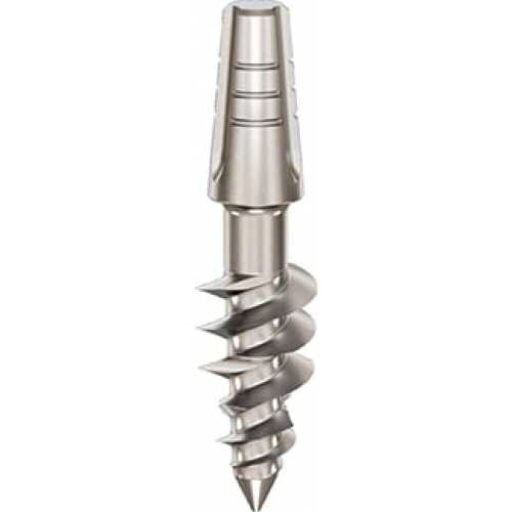
Basal dental implants are recommended for smokers because they are not affected by bone resorption. Basal dental implants are set in much deeper, harder bone, the cortical bone. As a result, basal implants are not affected by the resorption of soft gum tissue. It is therefore possible to place dental implants on smokers. This is the best solution for a complete dental restoration of both jaws.
A large number of patients who undergo basal dental implant treatment are current or former smokers. It’s the only effective solution to restore their smile and their ability to eat normally.

Basal Dental Implants for Smokers
Basal dental implants for smokers offer a real solution in cases where conventional implants usually fail. Smoking damages the soft gum tissue that conventional implants depend on for stability. Basal implants avoid that problem completely. They are fixed deep into the hard cortical bone of the jaw, a layer that heat and nicotine do not reach. That means smokers, including long-term smokers and regular vapers, can still get a full, fixed set of teeth that holds up over time.
Conventional Implants for Smokers
What are the limitations of conventional dental implants for smokers?
Smokers are not accepted by implant dentists who place conventional dental implants. The heat from cigarettes, whether tobacco cigarettes or electronic cigarettes, damages the soft gum tissue where conventional dental implants are placed. The resorption of the gums causes the implants to loosen and fall.
Conventional Implants Are Not Recommended for Smokers
Why do so many dentists refuse to treat smokers with conventional implants?
Most dentists who place conventional implants will not treat active smokers. The reason is straightforward. Conventional implants are short. They sit in the cancellous bone, the soft, spongy bone just beneath the gums. This is the same tissue damaged by the heat of cigarette smoke.
It makes no difference whether the heat comes from a tobacco cigarette or an e-cigarette. Vaping exposes the soft tissue around the teeth and implants to the same kind of heat damage. The gum tissue recedes, the bone underneath resorbs, and the implant loses its anchorage. Nicotine also narrows blood vessels and reduces circulation, which slows healing after surgery and after every follow-up procedure.
Smokers And The Risk of Complications
Am I more likely to develop gum disease if I smoke?
Smoking is one of the strongest risk factors for periodontitis, the advanced stage of gum disease that destroys the bone and tissue holding teeth in place. Smokers tend to develop more severe periodontitis, and it tends to progress faster than in non-smokers.
For implant patients, that risk carries over directly. Smoking weakens the immune system, which raises the chance of infection around a healing implant. It also slows osseointegration, the process by which bone fuses to the implant surface. Together, these factors give smokers a noticeably higher failure rate with conventional implants. Infection, gum recession, and loosening are all more common, and once one implant fails, it puts extra strain on the others.
Basal Implant Cortical Bone Anchorage
How do basal implants avoid the damage caused by smoking?
Basal dental implants are built differently from the start. They are longer than conventional implants and designed to reach the cortical bone, the dense, hard outer layer of the jaw. This bone is much less exposed to the heat and chemical effects of smoking, and unlike cancellous bone, it does not resorb after tooth loss or gum disease.
Because basal implants do not rely on cancellous bone for their stability, they sidestep the exact mechanism that causes conventional implants to fail in smokers. There is no dependence on tissue that is actively receding, and no fragile healing window where a conventional implant can lose its footing to gum shrinkage. This is why basal dental implants remain a realistic option for patients that other clinics have already turned away.
Because basal implants do not rely on cancellous bone for their stability, they sidestep the exact mechanism that causes conventional implants to fail in smokers. There is no dependence on tissue that is actively receding, and no fragile healing window where a conventional implant can lose its footing to gum shrinkage. This is why basal dental implants remain a realistic option for patients that other clinics have already turned away.
Tubero-Pterygoid Implants For Stability
How do you keep the bridge stable in the long run?
Basal implantology does not stop at using stronger bone. It also uses more implants, placed strategically across the whole jaw, to spread the load of chewing and reduce stress on any single point. A typical basal treatment places 8 to 12 implants per jaw, compared to the 4 to 6 used in conventional All-on-4 or All-on-6 systems.
Part of that approach involves tubero-pterygoid implants, placed behind the sinuses into the pterygoid process at the base of the skull. This is dense cortical bone that does not resorb, and it allows the dentist to restore the back molars, something conventional systems often cannot manage safely in smokers. All implants, along with any stable natural teeth, are then splinted together under one fixed bridge, usually 12 to 14 crowns. This spreads chewing forces evenly and keeps every implant stable, even while the gums continue to be exposed to smoke.
Part of that approach involves tubero-pterygoid implants, placed behind the sinuses into the pterygoid process at the base of the skull. This is dense cortical bone that does not resorb, and it allows the dentist to restore the back molars, something conventional systems often cannot manage safely in smokers. All implants, along with any stable natural teeth, are then splinted together under one fixed bridge, usually 12 to 14 crowns. This spreads chewing forces evenly and keeps every implant stable, even while the gums continue to be exposed to smoke.
Basal Implants: A Reliable Long-Term Solution for Smokers
Is this really my best option if I smoke?
For smokers, basal dental implants are not simply an alternative. In most cases, they are the only reliable long-term option. Conventional implants depend on tissue that smoking actively damages. Bone grafting, often proposed to compensate for that damage, carries a high failure rate in smokers because of poor circulation and slow healing.
Basal implants remove that dependency altogether. Anchored in the hard cortical bone, supported by tubero-pterygoid implants, and stabilized by a full dental bridge, they give smokers a predictable path to a complete, functional smile, without requiring them to quit first.
Frequently Asked Questions on Dental Implants for Smokers
I smoke. Can I still get basal dental implants?
Yes. Basal dental implants are fixed deeper into the hard cortical bone, which is not affected by the heat of cigarette or e-cigarette smoke that damages soft gum tissue. This makes a full dental restoration possible even for active smokers.
Do I need to stop smoking after getting basal implants?
It is best to stop, since cigarette heat can still affect the gum tissue around the bridge and create a small aesthetic gap over time. But it is not required for the implants to function, since they are anchored deep in the bone rather than the soft tissue around it.
The Risks of Conventional Dental Implants for Patients Who Smoke
Most dentists who practice conventional dental implantology refuse to treat patients who smoke because the risks are too high and they cannot guarantee good results in the long term. Smoking negatively impacts dental implants before and after the procedure:
Bone Loss
Smokers are more prone to bone resorption. The softy tissue of the cancellous bone recedes because of the heat of the cigarette. This soft bone is used to hold conventional implants. But its loss undermines the stability and long-term success of conventional implants. It increases the risk os the implants falling out.
Slow Healing
Nicotine reduces blood circulation and as a result slows the healing process. After the implantation it an jeopardize the integration of the implants in the jaw bone.
Risk of Infection
Smoking weakens the immune system. It increases the risk of infection after the implantation that can lead to the loss or necessary of the implants.
Periodontal Disease
As a result of the effects of smoking, patients have a higher propensity of developing gum disease and exacerbating it. After the implantation with conventional implants the gum disase can continue to propagate and lead to the loss of the dental implants.
A Higher Implant Failure Rate
Overall smokers have a higher risk of implant failure with conventional dental implants.
The Solution: Basal Dental Implants
Basal dental implants avoid the effects of smoking. They are placed deep into the hard cortical bone of the jaw that is not affected by the heat of the cigarette smoke and the soft bone resorption associated with gum disease. As a result, they are the best and often the only solution to fully restore the teeth of smokers.

Basal dental implants
for bruxism
Basal dental implants are the best solution for patients who suffer from bruxism. Basal implants resist the grinding of the teeth that is associated with bruxism because they are fixed deep into the hard cortical bone.
Basal dental implants
for diabetes
Basal dental implants are recommended for patients who are diabetic because they are integrated into the cortical bone that is not affected by the effects of diabetes on soft gum tissue.

Case Studies For Basal Dental Implants For Smokers
-
Dental restoration for missing teeth and bone atrophy with basal implants
Dr Genchev completed the full mouth dental restoration for this patient who suffered from edentulism with severe bone atrophy in 1 visit of 5 days. The price for the full dental restoration was 8990 Euro.
