What are conventional dental implants and are they right for me?
Conventional dental implants are traditional tooth replacement solutions that rely on the soft cancellous bone to support the implant. These shorter implants are the most common type used worldwide and are an effective solution for patients with healthy bone density. However, when you suffer from severe bone loss, gum disease or bruxism (teeth grinding) conventional implants often require additional procedures like bone grafting and sinus lift, which add months to your treatment timeline and significantly increase costs.

Conventional Dental Implants
How do traditional implants replace missing teeth?
Conventional dental implants are three-piece screws made from titanium that are surgically placed into the jawbone. The system consists of a screw inserted into the bone, an abutment connector, and a crown that looks like a natural tooth. These components are placed separately over 4-8 months as your bone heals between procedures. Conventional implants depend on osseointegration—the biological process where the cancellous bone fuses with the titanium screw—to provide stability.
The main limitation of conventional implants is their shorter length and placement in the soft cancellous bone that holds natural tooth roots. This bone resorbs after tooth loss, making conventional implants unsuitable for many patients without bone augmentation procedures. Most conventional implant dentists use the All-on-4 or All-on-6 systems for full mouth restoration, placing 4-6 implants per jaw primarily in the front areas.
Dental Conditions Treated
When are conventional implants recommended?
Conventional dental implants work best for patients with single tooth replacement needs or those with good bone density throughout their jaws. If you’ve lost one or a few teeth recently and still have sufficient bone volume, conventional implants provide a reliable solution. They’re also suitable for patients willing to undergo bone grafting procedures to rebuild missing bone before implant placement.
However, conventional implants face significant challenges with severe bone loss, advanced gum disease, bruxism, and patients who are smokers or diabetics. The soft cancellous bone that conventional implants rely on is compromised in these conditions, leading to higher failure rates. For patients with these challenges, basal dental implants offer a superior alternative by anchoring into the deeper cortical bone.
The Conventional Implant Procedure
What does the treatment process involve?
The conventional implant process typically requires multiple visits over 8-12 months. First, if you have bone loss, your dentist performs bone grafting, which requires 4-6 months of healing. Then the implant screw is placed during a surgical appointment, followed by another 3-6 months of healing while osseointegration occurs. Finally, the abutment and crown are attached in a third procedure.
For upper jaw bone loss, a sinus lift procedure may be needed, adding another 6-8 months and increasing complication risks. The All-on-4 system shortens this timeline slightly by angling implants to avoid some bone grafting, but it still provides only 4-6 implants per jaw with limited back tooth support. This multi-stage approach means you may need temporary dentures or bridges while waiting months between procedures.
Risks and Complications
What problems can occur with conventional implants?
The most significant risk with conventional implants is the need for bone grafting, which fails in 20-30% of cases, especially in patients with severe bone loss. Infection can occur at any surgical stage, potentially compromising the entire treatment. Peri-implantitis—inflammation around the implant—affects conventional implants more frequently than basal implants because their rough surfaces throughout the implant create areas where bacteria accumulate.
Nerve damage during placement can cause numbness or chronic pain in your lips, tongue, or chin. Sinus complications from sinus lift procedures lead to chronic sinusitis in 5-10% of patients. Conventional implants placed in soft bone have higher failure rates in smokers, diabetics, and patients with gum disease because these conditions compromise the bone healing necessary for osseointegration. The mechanical stress on just 4-6 implants in All-on-4 systems increases long-term failure risk.
Cost Considerations
How much do conventional implants cost?
Conventional dental implant costs vary widely depending on whether you need bone augmentation. For a single implant without complications, expect €2,000-€4,000 in Europe. However, when severe bone loss requires grafting and sinus lift procedures, the total cost for full mouth restoration can reach €40,000-€60,000 for both jaws. These costs include multiple surgeries, healing periods, temporary prosthetics, and the time commitment of 8-12 months.
Bone grafting alone costs €4,000-€8,000 per jaw, and sinus lifts add another €2,000-€4,000 each. With conventional implants, you’re paying not just for the implants themselves but for all the additional procedures needed to create sufficient bone volume. In contrast, basal implants eliminate these grafting costs entirely by utilizing the stable cortical bone, often saving €10,000-€25,000 in total treatment costs.
Conventional vs Basal Implants
How do traditional implants compare to basal implants?
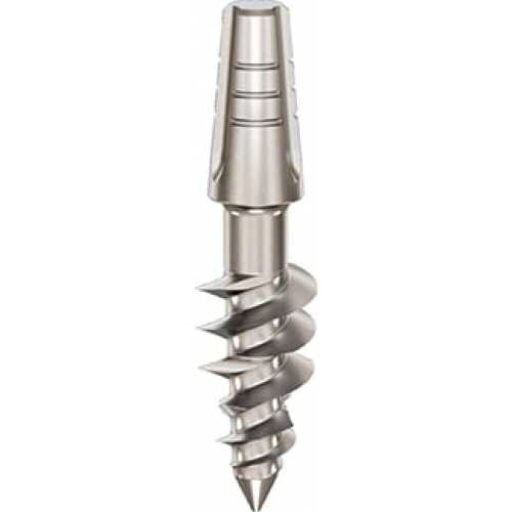
Conventional implants are shorter and placed in soft cancellous bone, while basal implants are longer and fixed into hard cortical bone. This fundamental difference means conventional implants require bone grafting for bone loss, whereas basal implants do not. The treatment timeline differs dramatically: conventional implants take 8-12 months with multiple surgeries, while basal implants deliver complete results in just 3-5 days with one surgical session.
Conventional implants use 4-6 implants per jaw in All-on-4 systems, providing limited back tooth support. Basal implant dentists place 8-12 implants per jaw, including pterygoid implants behind the sinuses to recreate full molar function. Success rates for conventional implants drop significantly when bone grafting is required or in patients with diabetes, smoking, or gum disease—conditions where basal implants excel due to their cortical bone placement and immediate loading protocol.
In cases of severe bone loss on the maxillary, the upper jaw, conventional implant dentists often recommend zygomatic implants. They increase the risk of complications. But, basal implant dentists avoid these complications by placing tubero-pterygoid implants behind the sinuses.
The cost comparison heavily favors basal implants when you factor in eliminated grafting procedures, shorter treatment time, and single surgical appointment. While both implant types use medical-grade titanium and can last many years with proper care, basal implants offer superior stability in challenging cases by avoiding dependency on soft tissue healing that conventional implants require.
FAQ on conventional dental implants
What are basal implants and how do they differ from conventional implants to replace missing teeth?
Basal implants are a type of dental implant designed for situations with inadequate bone volume, often eliminating the need for bone grafting. Unlike conventional implants that rely on osseointegration, fusion with the bone, basal implants achieve stability through fixation in the dense cortical bone. They are also typically loaded immediately or within a few days, significantly reducing treatment time.
Why might someone choose basal implants over conventional implants?
Common reasons for choosing basal implants include: severe bone loss that would normally require grafting, desire for immediate loading of prosthetics to save time, medical conditions that complicate conventional implant procedures such as the lack of bone, cost considerations, and wanting to avoid lengthy treatment times and multiple surgeries.
Case Studies For Conventional Dental Implants
-
Failed All-on-6 Saved with Basal Implants
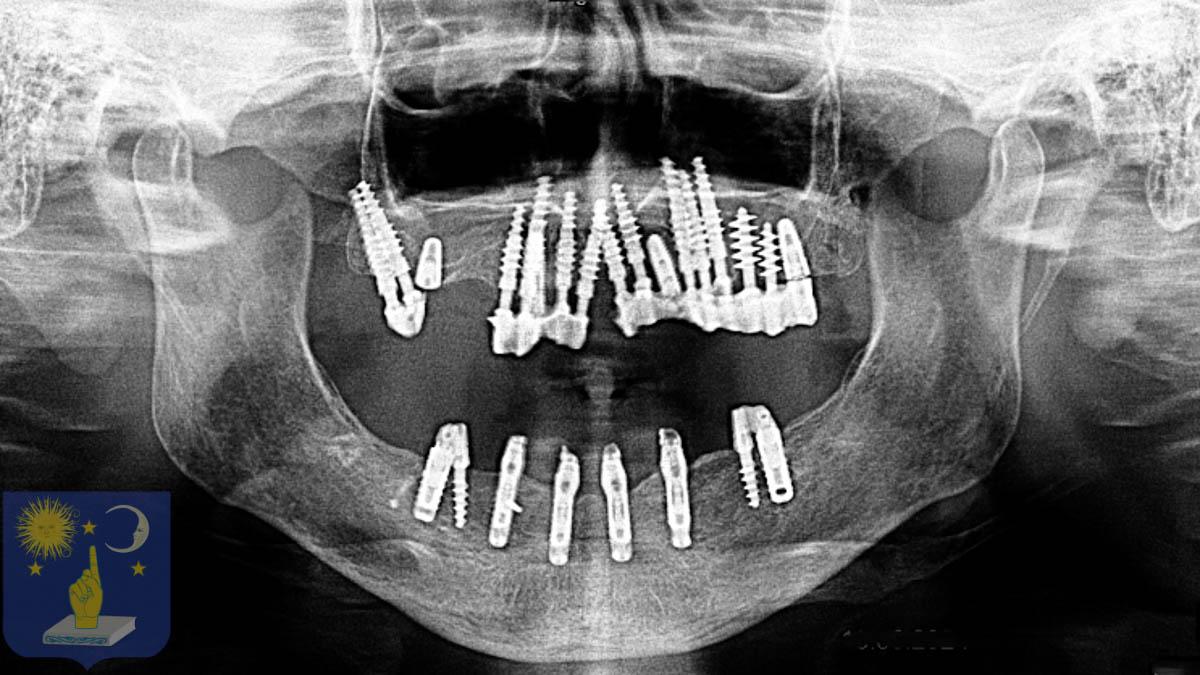
Dr Genchev saved Françoise after she suffered a failed All-on-6 procedure. Full dental restoration with basal dental implants in 5 days treating prognathism for €9,990.
-
Dr Genchev Bone Atrophy Treatment with Basal Implants
Dr Genchev in Bulgaria successfully rehabilitates with basal implants Paul’s maxillary who suffered from severe bone atrophy and had experienced 3 failed bone grafts. Full dental restoration in 5 days for €6,500. Real case study showing why basal implants succeed where conventional implants fail.