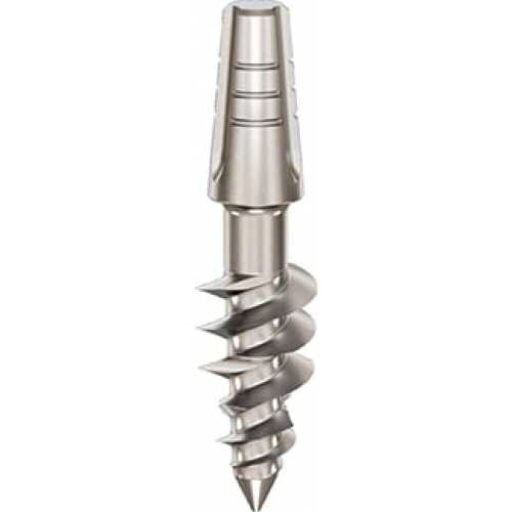
Pterygoid dental implants are the best solution for the full dental restoration of edentulous patients that suffer from severe bone loss.
They are also known as are also known as Tubero Pterygoid dental implants. They are a better solution than Zygomatic dental implants, Sinus lift and bone grafting.

Tubero-pterygoid implants restore the back teeth of the upper jaw by anchoring into the pterygoid process of the sphenoid bone. This dense cortical structure sits directly behind the maxillary sinus at the base of the skull. It does not resorb after tooth loss. And because the implant reaches behind the sinus rather than below it, there is no need for a sinus lift, no bone graft, and no zygomatic implant. Patients who have spent years without upper molars, and who have been told they have no bone left to work with, can have full chewing function restored in a matter of days.
The Pterygoid Process
Where is the pterygoid process?
The pterygoid process is a bony projection that descends from the sphenoid bone, part of the base of the skull. It sits directly behind the maxillary tuberosity, at the very back of the upper jaw. It consists of two plates: the medial plate, which is the primary cortical anchorage target for tubero-pterygoid implants, and the lateral plate. The junction between the posterior surface of the maxillary tuberosity and the pterygoid process is known as the tuberosity-pterygoid junction. Both structures contain dense cortical bone that is connected to the skull base.
This is what makes them clinically significant. The soft cancellous bone of the alveolar ridge resorbs progressively after tooth loss. The pterygoid process does not. Even in patients with extreme maxillary atrophy, this cortical complex at the back of the jaw remains stable, dense, and mechanically reliable. In terms of the Misch bone density classification, D1 and D2 bone types are typical for the pterygoid process and tuberosity-pterygoid junction. This is the densest category of cortical bone available in the human jaw.
For patients with severe posterior maxillary bone loss, the pterygoid process is often the only structure in the upper posterior jaw that can provide the primary stability required for immediate loading of a fixed dental bridge.
The Importance of the Back Teeth
Why do I need the teeth at the back to chew normally?
The molar teeth at the back of the upper jaw do most of the work when you eat. They crush food, break down fibre, and allow you to chew meat, raw vegetables, and anything hard. Without them, patients compensate by chewing only at the front of the mouth, often with the lower jaw. Over time this creates uneven pressure on the remaining teeth, accelerates bone loss in untreated areas, and significantly reduces quality of life.
Conventional approaches such as All-on-6 cannot reliably restore molar function in patients with severe posterior maxillary bone loss, because they depend on bone that is no longer there. Tubero-pterygoid implants solve this problem directly. By anchoring into bone that is independent of alveolar resorption, they provide posterior distal support for a full upper bridge that includes a complete set of teeth from front to back.
Tubero-Pterygoid Implants
Which implants are actually designed to reach the pterygoid process?
Not every implant system is suitable for pterygoid anchorage. The implants placed in this zone need to be long enough to reach the target cortical structure, and their thread geometry must engage dense bone reliably. The abutment also needs to be adjustable, because the insertion angle is oblique by design. Three implant systems are used in clinical dental practice for this zone.
Ihde Dental BCS
The Ihde Dental BCS is a one-piece cortical anchorage implant used when the posterior maxilla has little or no cancellous bone remaining. The implant engages dense cortical structures directly.
In Dr Genchev’s full rehabilitation of a totally edentulous patient with severe bilateral bone atrophy, a BCS implant at 3.5 x 20 mm was placed at position 17-2 at a posterior oblique angle to reach the medial plate of the pterygoid process of the sphenoid bone. This provided the primary distal tubero-pterygoid anchor for the right side of the upper bridge. A second BCS at 4.6 x 14 mm was placed at position 17 through the tuberosity-pterygoid junction. Two further BCS implants at positions 15 and 16 anchored into the cortical bone of the vertical process of the palatine bone. BCS was selected for this zone specifically because no cancellous bone remained and the only available stability mechanism was pure cortical fixation.
In Dr Genchev’s gum disease case study, a BCS implant placed at position 27 was anchored into the tubero-pterygoid process because there was no cancellous bone remaining in that area.
Ihde Dental TPG Uno
The Ihde Dental TPG Uno is used in the pterygoid zone when both cancellous and cortical bone are present. Its threaded body compresses the cancellous bone layer while the apical part engages the cortical bone of the pterygoid process. This dual-mechanism anchorage allows the implant to work with whatever bone remains.
In the same edentulism case by Dr Genchev, three TPG Uno implants were placed in the left posterior maxilla at positions 25, 26, and 27, where cancellous bone was still present alongside cortical bone. The longest, at 3.5 x 17 mm at position 27, reached deep cortical anchorage in the pterygoid plate of the sphenoid bone. At position 25, the TPG Uno was attached toward the pyramidal process of the palatine bone, which articulates with the pterygoid plates. In the gum disease case study, one TPG Uno was placed at position 17 anchored into the tubero-pterygoid process, selected because some cancellous bone remained in that area.
The contrast between the two sides of the same patient’s upper jaw illustrates the clinical logic: BCS for pure cortical anchorage when cancellous bone is absent; TPG Uno when both layers are available and can be combined.
BasalFix TPI
The BasalFix TPI (Tubero-Pterygoid Implant) is a dentist implant series engineered specifically for this zone. It is inserted at a posterior oblique angle with its target being the pterygoid process and tuberosity-pterygoid junction. The abutment can be bent up to 15 degrees to compensate for the insertion angulation. The surface receives plasma treatment by Nobil Bioricerche, which removes adherent endotoxin from the titanium surface.
Typical dimensions for primary tubero-pterygoid anchorage with the TPI are 3.5 x 20 mm at the most distal position. Wider dimensions such as 4.6 x 14 mm are used through the tuberosity-pterygoid junction. The TPI is available in width from 2.8 to 4.5 mm and length from 6 to 15 mm. Its anchorage is immediate: the cortical bone of the pterygoid process is reliably dense regardless of how much maxillary alveolar bone has been lost. One TPI placed at the distal position replaces the need for a sinus lift with a single oblique cortical fixation behind the sinus.
Where is the pterygoid implant placed?
Pterygoid dental implants are a long basal dental implant that are used to replace missing teeth behind the sinuses in the posterior maxilla.


They are also known as are also known as Tubero-Pterygoid dental implants.
The advantages and benefits of pterygoid implants
Pterygoid dental implants are essential for a full dental restoration. They complete the rehabilitation of the upper jaw to recreate the natural functionality of the mouth.

Edentulism (tooth loss)
Bone Atrophy (bone loss)
Full set of teeth

NO Zygomatic Implants
NO Sinus Lift
NO Bone Graft
What is the difference between zygomatic and pterygoid implants?
Zygomatic implants are placed through the sinuses whilst pterygoid implants are anchored behind the sinuses in the pterygoid process of the sphenoid bone.
What are the risks and dangers of pterygoid dental implants?
The disadvantages and risks of Pterygoid dental implants depend on the quality of the dental implant surgeon. Only qualified and experienced dental implant surgeons should perform this operation. It requires more qualifications than conventional implantology. And implantologists that perform this procedure most commonly have a diploma and proven track record in basal implantology. Some of the common risks of pterygoid implants include bleeding and pain that can be managed adequately and the displacement or loss of the implant if it is not anchored properly.
Yet, pterygoid implants are the best solution for patients with severe upper jawbone atrophy who want to receive dental implants without the need for bone grafting, sinus lifting or zygomatic implants.
However, pterygoid implants are the best solution for patients with severe atrophy of the upper jawbone who wish to receive dental implants without the need for bone grafting, sinus lift or zygomatic implants.
FAQ – Tubero-Pterygoid Implants
What are pterygoid implants?
Pterygoid implants are also called tubero-pterygoid dental implants. Pterygoid are longer basal dental implants that are fixed behind the sinuses. They require a special technique and more experience to be fixed behind the sinuses. They enable the support of a full dental bridge and they avoid the need for sinus lift. Tubero-pterygoid dental implants are the best solution for the dental restoration of the upper jaw of edentulous patients that suffer from severe bone loss.
Do basal implant dentists use zygomatic implants?
No, basal implant dentists do not use zygomatic implants. Instead, they use tubero-pterygoid implants that are placed behind the sinuses.

Alternatives to pterygoid dental implants
There are several alternatives to tubero-pterygoid dental implants. But each have their draw-backs.

NO Bone Graft
No bone graft needed because it often fails for edentulous patients with severe bone loss.

No need for zygomatic implants that increase the risk of complications.

Sinus lift can cause chronic sinusitis. Basal implants avoid the need for lifting the sinuses.
All this information is provided solely as educational content. It is not medical advice. Our aim is to clarify the terminology and concepts relating to implantology and dental restoration with basal dental implants. For professional dental advice please consult multiple qualified implant dentists and compare their answers.
Medical Review & Editorial Integrity
Reviewed by Dr. Genchev, Master of Basal Dental implantology.
This content adheres to the Editorial Guidelines of The Basal Dental Implant Association. To ensure clinical accuracy, this page has been reviewed for medical integrity regarding anatomical structure and dental implantology procedures.
Last Updated: 02-08-2026
Case Studies For Tubero-pterygoid Dental Implants
-
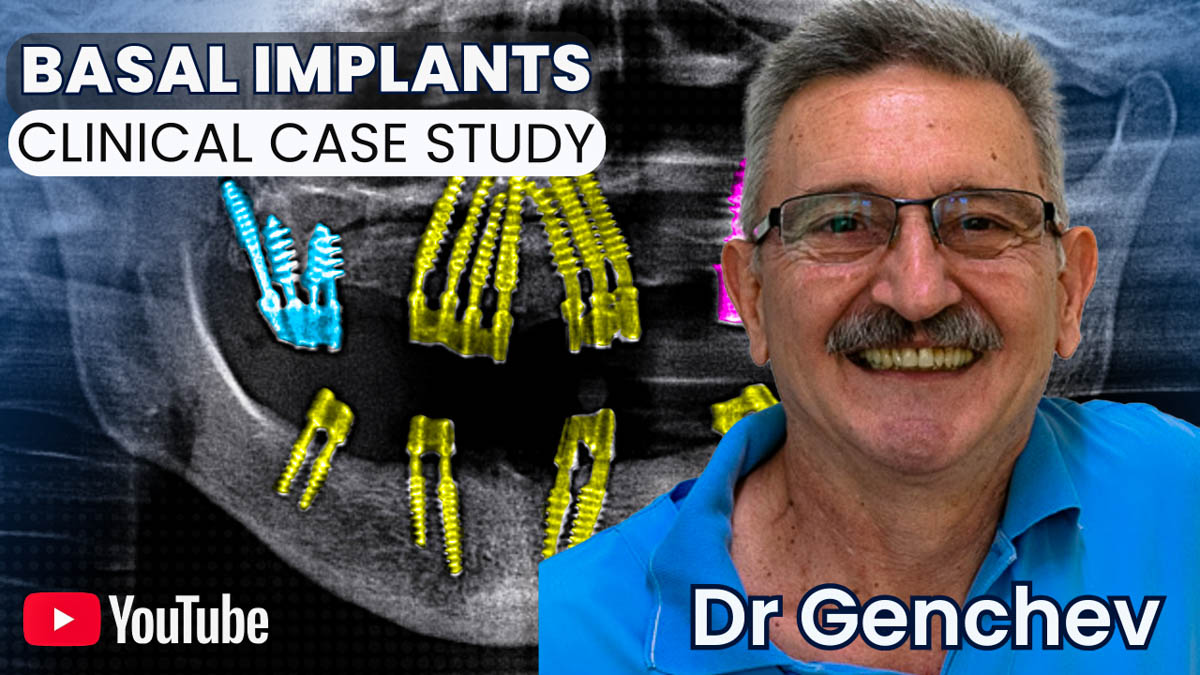
Basal Implants for Edentulism and Bone Atrophy
Clinical case study of Dr Genchev’s basal implant protocol for total edentulism and severe bone atrophy
-
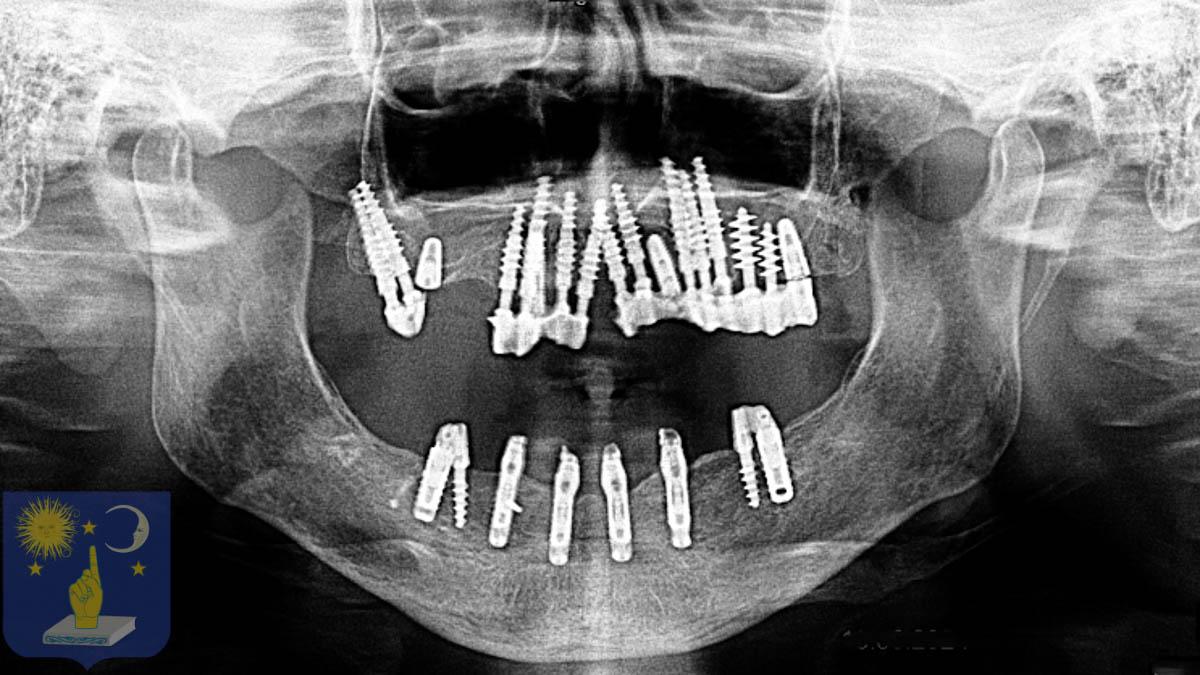
Failed All-on-6 Saved with Basal Implants
Dr Genchev saved Françoise after she suffered a failed All-on-6 procedure. Full dental restoration with basal dental implants in 5 days treating prognathism for €9,990.
-
Dr Genchev Dental Restoration for Gum Disease
Dr. Genchev transformed Véronique’s life in just 5 days with basal implants, restoring her ability to eat without pain and giving her back a confident smile.
-
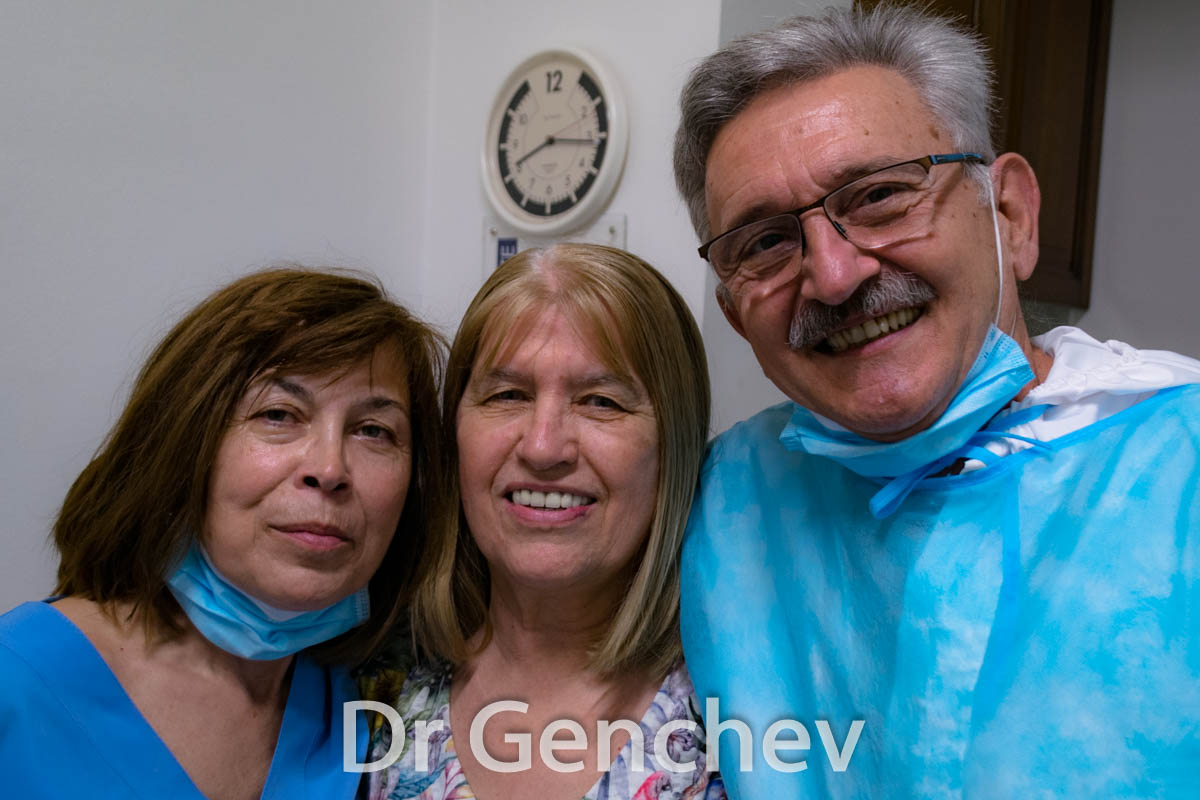
Dental restoration for missing teeth and bone atrophy with basal implants
Dr Genchev completed the full mouth dental restoration for this patient who suffered from edentulism with severe bone atrophy in 1 visit of 5 days. The price for the full dental restoration was 8990 Euro.
