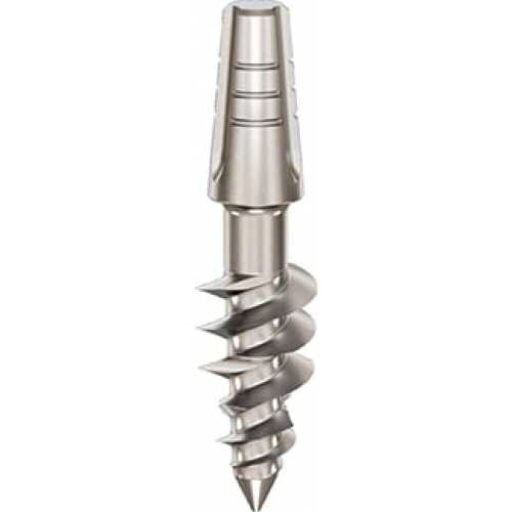
A sinus lift is a dental procedure that increases the volume of bone in the sinuses to facilitate the fixing of conventional dental implants. It is usually part of an All-on-4 or All-on-6 procedure.
Basal implant dentists do not need to carry out a sinus lift because they know how to place Pterygoid dental implants behind the sinuses to complete the full dental restoration of the upper jaw.

Sinus lift is required by conventional implantologists because conventional implants are too short. They are not suitable for patients that suffer from severe bone loss. The lifting of the sinusal membrane is necessary to create sufficient bone matter to anchor the short conventional implants under the sinuses. Basal implants are longer and can be anchored in front and behind the sinuses in the cortical bone. It avoids the lengthy, complicated and expensive procedure of sinus lifting.
A sinus lift is a procedure that adds bone under the maxillary sinus so conventional dental implants have somewhere stable to hold. It’s usually part of the All-on-4 and All-on-6 treatment plans, and it exists for one reason: conventional implants are short, and the bone in the back of the upper jaw is often too thin to hold them on its own. The procedure adds weeks of healing, several thousand euros, and its own set of risks, including a real chance of chronic sinusitis. Basal dental implants take a different route. They’re longer, and instead of trying to fit extra implants into the same limited space, they’re placed along the entire length of the jaw, including behind the sinus in the pterygoid bone. That means no lifting, no added healing time, and no separate surgery to plan around. Here’s why conventional implants need a sinus lift, what it costs and risks, and how basal implants skip it.
Conventional Implants Need a Sinus Lift
Why does my dentist want to lift my sinus before placing implants?
The maxillary sinuses sit right above where your upper back teeth used to be. Once those molars are gone, the bone underneath them shrinks fast, and the sinus floor tends to drop lower into the space left behind. Conventional implants need a minimum amount of bone height to sit securely. When bone loss leaves less than that, there’s nowhere for a short implant to go.
A sinus lift is the fix. The dentist opens a small window in the bone wall, lifts the sinus membrane upward, and packs graft material into the gap created underneath it. Once that graft hardens into new bone, a conventional implant can be placed on top of it. It’s essentially building a new floor for the sinus so a short implant has enough bone to sit in.
All-on-4 and All-on-6 Depend on a Sinus Lift
Why does my dentist say I still need this with All-on-4 or All-on-6?
All-on-4 tries to work around this by angling the two back implants forward, away from the sinus, so they can go in without lifting it. That trick has a real limit though. It only reaches as far back as the premolars, not the molars, which is why All-on-4 patients often report weaker chewing on food that needs real molar pressure.
All-on-6 runs into the same wall a bit further back. When the angled implants still can’t clear the sinus, or when there isn’t enough bone at the front to place four to six implants securely, a sinus lift becomes part of the plan. In more severe cases, conventional dentists turn to zygomatic implants instead: extremely long implants that pass straight through the sinus cavity to anchor in the cheekbone. Each of these workarounds responds to the same underlying issue, which is that the implants being used are too short for the space available.
The Risks of a Sinus Lift
What can go wrong with a sinus lift?
Sinus lift surgery carries its own complications, separate from the implant itself. The sinus membrane is thin and tears during the procedure in an estimated 10-35% of cases, even with experienced surgeons. A torn membrane can let graft material shift into the sinus cavity and raises the odds of infection afterward. Chronic sinusitis develops in roughly 5-10% of patients following a sinus lift, bringing ongoing congestion, facial pressure, and headaches that can last for years.
Because the sinus area has a rich blood supply, bleeding tends to run heavier than in other implant procedures, and swelling and discomfort last longer too. Age adds another layer of risk. Patients over 50 are more likely to find that the grafted material never fully hardens. It can stay in a soft, gel-like state or get reabsorbed by the body within a few months, leaving too little bone to support an implant after all that healing time. At that point, the remaining options are usually zygomatic implants, which carry their own sinus-related risks, or tubero-pterygoid basal implants placed behind the sinus entirely.
The Added Cost of a Sinus Lift
How much extra will a sinus lift add to my treatment?
A single sinus lift typically costs €2,000-€4,000. If both sides of the upper jaw need it, that’s €4,000-€8,000 added to the base price of treatment, before any implants go in. Combined with bone grafting, which is often needed alongside it, a course of All-on-6 quoted at €15,000-€25,000 per jaw can climb to €40,000-€60,000 for both jaws once every procedure is added up. And if the graft doesn’t harden properly, which happens more often in older patients, part of that cost gets repeated. Basal implants avoid this expense entirely because there’s no sinus lift, no bone graft, and no separate procedure to budget for.
The Added Time of a Sinus Lift
How much longer will treatment take if I need a sinus lift?
Healing after a sinus lift takes 6-8 months before the graft is solid enough to hold an implant. Only then can the conventional implant be placed, which needs its own 3-6 months to integrate before a permanent bridge goes on top. Altogether, that’s 8-12 months from first consultation to finished teeth, often with a temporary denture in between.
Basal implants skip almost all of that waiting. Because the implant anchors directly into bone that’s already dense and stable, it can support a bridge right away. Most basal treatments are completed in 3 to 5 days, from extraction to a fixed, functioning set of teeth.
Basal Implants Avoid the Sinus Lift
How do basal implants get around this problem?
Basal implants solve the space problem differently. Instead of relying on a handful of short implants clustered at the front of the jaw, a basal implantologist typically places 10-12 implants across the upper jaw, spread along its entire length rather than squeezed into the areas with the most bone. Behind the sinus, tubero-pterygoid implants anchor into the pterygoid process, a dense plate of bone at the base of the skull that doesn’t resorb the way the bone around your molars does. Because these implants reach behind the sinus rather than underneath it, there’s no membrane to lift and no graft to wait on.
This wider distribution also means the molars aren’t left out. All-on-4 and All-on-6 can struggle to give real chewing power at the back of the mouth. Basal implants, including the pterygoid implants placed behind the sinus, restore that function directly as part of a full dental restoration. Patients travelling from 🇫🇷 France, 🇩🇪 Germany, and 🇨🇭 Switzerland for treatment often arrive after being quoted a sinus lift and bone graft at home, and leave with a complete, fixed bridge in under a week.
The advantages of pterygoid implants
Tubero-pterygoid dental implants are essential for a full dental restoration. They complete the rehabilitation of the upper jaw to recreate the natural functionality of the mouth.
Basal Implants

Behind the sinuses
Bridge 14 crowns
Sinus lift

Risk of sinusitis
More time & money
Frequently Asked Questions on Sinus Lift
Do basal implantologists perform a sinus lift?
No. Basal implants eliminate the need for a sinus lift. Because they’re longer and anchor into cortical bone behind and around the sinus rather than underneath it, including tubero-pterygoid implants placed behind the sinus itself, there’s no need to add bone or lift the sinus membrane at any point in treatment.
Do basal implantologists use zygomatic implants?
No. When conventional treatment can’t proceed without a sinus lift, or when a graft fails to harden, dentists sometimes turn to zygomatic implants, which pass through the sinus cavity. Basal implantologists use tubero-pterygoid implants instead, placed behind the sinus, which avoids that risk altogether.
What are the risks of a sinus lift?
There are risks associated with a sinus lift, both health risks and the risk of failure. They include swelling, discomfort, bleeding and infection. But, the most common complication of the sinus lift is chronic sinusitis.
Patients aged 50 years and more have a higher risk of failure as the bone matter injected in the sinus membrane does not harden. It remains in a gelatinous state. It can also be reabsorbed by the body within a few months. In both cases there is not sufficient bone matter to place any conventional dental implants under the sinuses. As a result it is not possible to complete the rehabilitation of the upper jaw. The only alternative solutions in this case are zygomatic implants that have their drawbacks or tubero-pterygoid basal dental implants that are the best long-term solution.
Sinus lift or bone graft?
What are the similarities and differences between a sinus lift and a bone graft? Both are used to achieve the same goal of increasing bone matter for placing classical also known as conventional dental implants. Here are the differences between the two procedures:
Sinus Lift
A sinus lift is a type of bone graft procedure that is performed in the sinuses.
Bone Graft
A bone graft is a dental procedure that involves adding bone matter to either the upper or lower the jaw to increase the volume of bone matter to place conventional dental implants. There are different types of bone grafting. They include taking bone from another part of the body or using synthetic bone material.
In summary, a sinus lift is a type of bone graft procedure that is performed in the sinuses. Whilst a bone graft involves adding bone to any part necessary of the upper and lower jaw.
Advice on sinus lift
How to find a good implant dentist for a full mouth dental restoration without a sinus lift?
Thsi website will help find the appropriate basal dental implant surgeon for full mouth dental restoration without requiring a sinus lift. Our advice is based on your dental condition, location and budget.
Not all dentists are equal. Basal implantology requires additional qualifications. And not all qualified basal implantologists are sufficiently experienced to place pterygoid dental implants successfully. We can help you find the right implant dentist.
And when you find a dental implant surgeon ask for before and after photos of his patients. Check his diplomas. And check his previous experience by analysing the OPG panoramic x-ray of his patients. Compare the volume of bone with your own to understand if he has relevant experience.
All this information is provided solely as educational content. It is not medical advice. Our aim is to clarify the terminology and concepts relating to implantology and dental restoration with basal dental implants. For professional dental advice please consult multiple qualified implant dentists and compare their answers.