What is All-on-6 and is it the right solution for replacing my missing teeth?
All-on-6 is a full mouth dental restoration system that uses six conventional dental implants per jaw to support a complete bridge of teeth. While this approach has become popular for patients needing full arch restoration, it has significant limitations for those with severe bone loss, gum disease, or complex dental conditions. The system relies on shorter implants placed in soft cancellous bone that often requires bone grafting to provide adequate support. For patients with challenging conditions, basal dental implants offer superior stability, faster treatment, and avoid the need for bone augmentation procedures.

What Is All-on-6
How does All-on-6 replace a full arch of teeth?
The All-on-6 system uses six conventional dental implants strategically positioned in your jaw to support a fixed bridge with 10-12 crowns. The two front implants are placed vertically in the front of your jaw, while the two back implants are angled at 30-45 degrees to maximize contact with available bone and avoid your sinuses. This angled placement allows some patients to avoid sinus lift procedures, though bone grafting is still frequently required when bone density is insufficient.
The bridge attached to these six implants recreates your front and side teeth but provides limited support for back molars. The cantilevered design extends the bridge beyond the last implant to create back teeth, but this creates mechanical stress and limits your ability to chew tough foods with your molars. All-on-6 works best for patients with moderate bone loss who want a faster alternative to traditional implant-by-implant restoration.
Why Patients Choose All-on-6
What are the advantages of the All-on-6 system?
Patients choose All-on-6 because it offers full mouth restoration with fewer implants than traditional approaches, potentially reducing costs and surgical complexity if no bone grafting procedure is necessary. The system became popular because the angled back implants sometimes avoid the need for sinus lift procedures in the upper jaw. Treatment is faster than placing individual implants for each missing tooth, and many conventional implant dentists are trained in the All-on-6 protocol.
However, these advantages only apply to patients with adequate bone density. When severe bone loss exists, All-on-6 requires bone grafting anyway, eliminating the time and cost benefits. The limited number of implants concentrates chewing forces on just six points, increasing stress and long-term failure risk. Patients with gum disease, significant bone atrophy, diabetes, or smoking habits often face poor outcomes with All-on-6 because the soft cancellous bone placement cannot provide reliable stability in these conditions.
The All-on-6 Treatment Process
What does the All-on-6 procedure involve?
The All-on-6 process typically requires two main phases over several months. First, if you need bone grafting due to insufficient bone density, this procedure is performed and requires 4-8 months of healing before implants can be placed. During the implant surgery, your dentist places six conventional implants and may attach a temporary bridge the same day. However, full osseointegration requires 3-8 months before your permanent bridge can be loaded onto the implants.
The total timeline extends to 8-12 months when bone grafting is needed. You’ll need multiple appointments for planning, grafting, implant placement, healing checks, and final bridge fabrication. During healing periods, you may wear temporary dentures or bridges that restrict your diet to soft foods. This extended timeline and multiple procedures create more opportunities for complications compared to single-stage treatments.
All-on-6 dental restorations often fail after a few months because the final bridges were fixed too early before the bone had time to heal. The soft cancellous bone has not had time to heal around the implants. The conventional implants loosen inside the bone and sometimes fall out.
Additional Procedures and Implant Types
What other procedures might I need with All-on-6?
Bone Grafting
Bone grafting is frequently required with All-on-6 when your jaw has experienced significant bone loss. The six conventional implants need adequate bone volume in specific locations, and grafting rebuilds missing bone over 4-6 months. In the upper jaw, some patients require sinus lift procedures if the back implants cannot be angled sufficiently to avoid the sinus cavity. These additional procedures substantially increase your treatment time and costs.
Zygomatic implants
For severe upper jaw bone loss, conventional dentists sometimes recommend zygomatic implants instead of standard All-on-6 implants. These extremely long implants pass through your sinus cavity to anchor in your cheekbone. While zygomatic implants avoid bone grafting, they significantly increase the risk of chronic sinusitis and sinus complications. This combination of procedures demonstrates the limitations of conventional implant approaches for patients with complex dental conditions.
Risks and Complications
What problems can occur with All-on-6 implants?
The primary risk with All-on-6 is implant failure when bone quality is inadequate. Conventional implants placed in soft cancellous bone have higher failure rates in patients with gum disease, diabetes, or smoking habits because these conditions compromise the bone healing necessary for osseointegration. The concentration of all chewing forces on just six implants creates mechanical stress that can lead to bone loss around the implants over time.
The All-on-6 system does not adequately recreate the molar teeth at the back of the jaws to enable normal chewing. The bridge cantilevers beyond the last implants, creating mechanical weakness.
Bone grafting procedures, often required for All-on-6, fail in 20-30% of cases, especially in patients with severe bone loss. Infection can occur during any surgical stage. Peri-implantitis, inflammation around the implant, affects conventional implants more frequently because their rough surfaces create areas where bacteria accumulate. The cantilevered bridge design puts excessive stress on the back implants, increasing failure risk. Patients often report difficulty chewing tough or fibrous foods because the back teeth lack direct implant support underneath them.
Cost
How much does All-on-6 treatment cost?
All-on-6 treatment costs €15,000-€25,000 per jaw in most European countries, though prices vary by location and whether additional procedures are needed. When bone grafting is required, add €4,000-€8,000 per jaw. Sinus lift procedures cost another €2,000-€4,000 each. The total for both jaws with necessary bone augmentation often reaches €40,000-€60,000.
These costs include multiple surgical appointments, healing periods, temporary prosthetics, and the extended timeline of 8-12 months. While All-on-6 may seem less expensive initially than individual implants for each tooth, the final cost often matches or exceeds basal implant treatment, especially when complications occur or grafts fail, requiring additional procedures. Basal implants typically deliver complete restoration for both jaws at comparable or lower total cost while avoiding grafting procedures entirely.
Treatment Time
How long does All-on-6 treatment take?
Without complications, All-on-6 takes 3-6 months from implant placement to final bridge. However, when bone grafting is required, the timeline extends to 8-12 months total. You’ll have a temporary bridge during healing, but must restrict your diet to soft foods and avoid using your back teeth for chewing. Multiple appointments are required for planning, bone grafting, implant placement, healing checks, and final restoration.
In contrast, basal dental implants complete your entire restoration in just 3-5 days with a single surgical appointment. You receive permanent teeth immediately and can begin eating normally within a week. For patients who want to avoid months of waiting and multiple procedures, basal implants offer a dramatically faster solution.
All-on-6 vs Basal Implants
How does All-on-6 compare to basal dental implants?
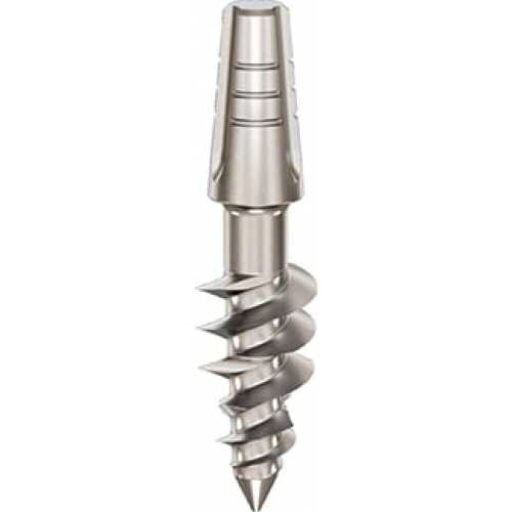
The fundamental difference lies in implant placement and design. All-on-6 uses six short conventional implants in soft cancellous bone, while basal implants use 8-12 longer implants fixed into hard cortical bone. This means All-on-6 requires bone grafting for severe bone loss, whereas basal implants do not. The treatment timeline differs dramatically: All-on-6 takes 8-12 months with multiple surgeries, while basal implants deliver complete results in 3-5 days.
All-on-6 provides limited back tooth support through cantilevered bridge design, restricting your ability to chew normally with molars. Basal implant dentists place 8-12 implants per jaw, including pterygoid implants behind the sinuses to recreate full molar function for normal chewing. Success rates for All-on-6 drop significantly in patients with gum disease, diabetes, or smoking habits, conditions where basal implants excel due to cortical bone placement and immediate loading protocol. For patients with severe bone loss, advanced periodontal disease, or complex dental conditions, basal implants deliver superior stability, faster treatment, and better long-term outcomes without the need for bone grafting or sinus lift procedures.
FAQ – Questions About All-on-6
What is the difference between All-on-6 and basal implants?
All-on-6 is a full dental restoration solution that uses conventional implants. Six conventional implants are placed on the upper jaw and six implants on the lower jaw. A bridge of twelve crowns is placed on top of the implants. Conventional implants are shorter and fixed into the soft cancellous bone of the jaw. For patients who suffer from bone loss, conventional implants require a bone graft and sinus lift to treat patients with bone loss. Basal implants are generally longer and fixed into the hard cortical bone. They avoid the need for bone grafting, sinus lift and zygomatic implants. Basal implants are a better solution for patients who suffer from advanced gum disease and missing teeth with severe bone atrophy.
Do basal implantologists dental practice All-on-6 dental restorations?
No, basal implantologists do not usually dental practice All on 6 dental restorations because they have proved to be inefficient in treating patients who suffer from severe bone loss.
Case Studies For All-on-6
-
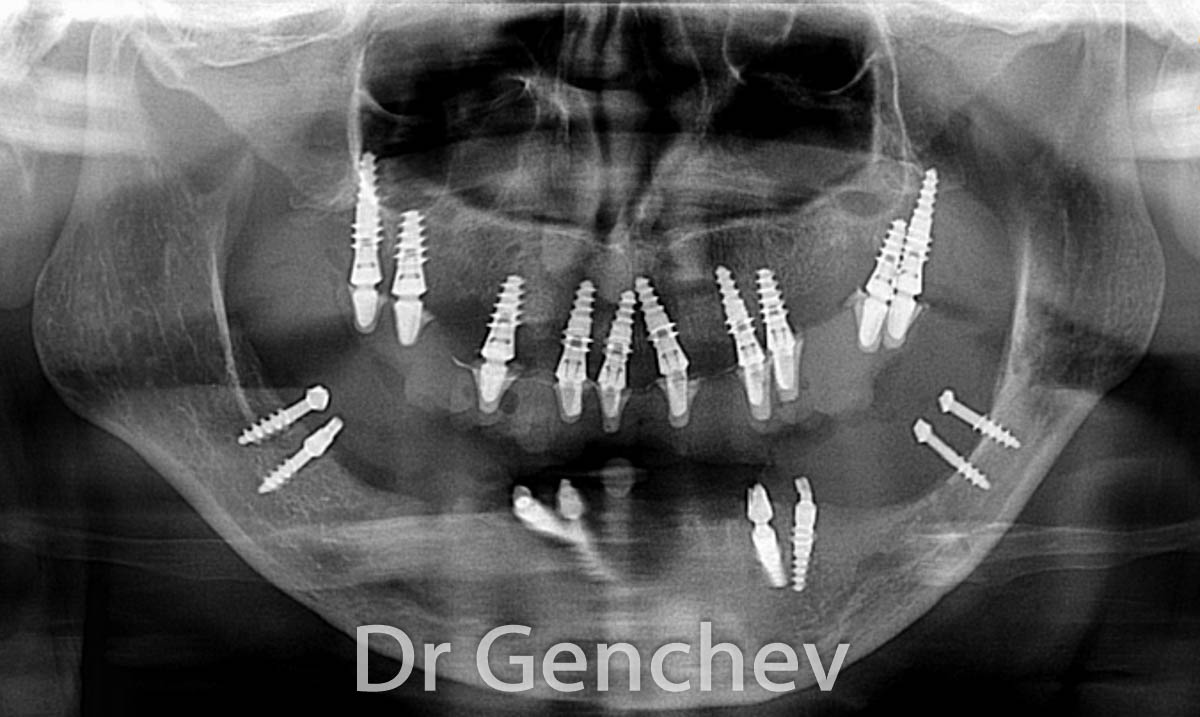
Dr Genchev Lower Jaw Restoration
Dr. Genchev transformed Aline’s life in just 5 days with basal implants, completing the lower jaw restoration that another basal implant dentist had declared too difficult.
-
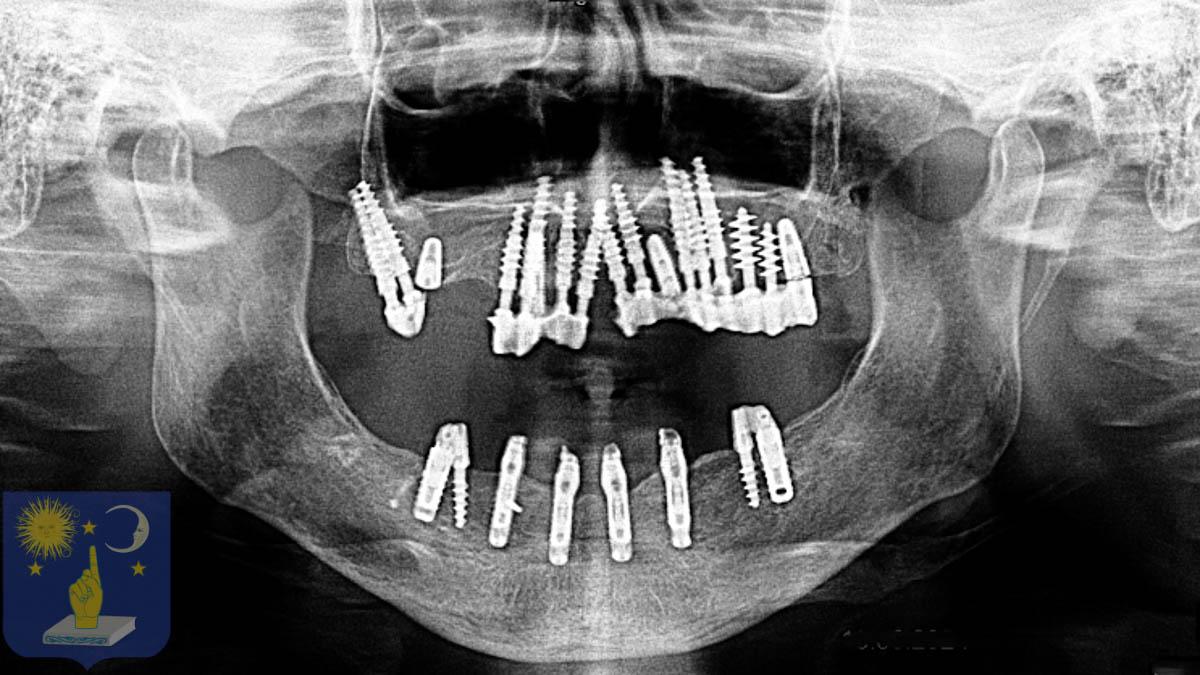
Failed All-on-6 Saved with Basal Implants
Dr Genchev saved Françoise after she suffered a failed All-on-6 procedure. Full dental restoration with basal dental implants in 5 days treating prognathism for €9,990.
-
Dr Genchev Bone Atrophy Treatment with Basal Implants
Dr Genchev in Bulgaria successfully rehabilitates with basal implants Paul’s maxillary who suffered from severe bone atrophy and had experienced 3 failed bone grafts. Full dental restoration in 5 days for €6,500. Real case study showing why basal implants succeed where conventional implants fail.