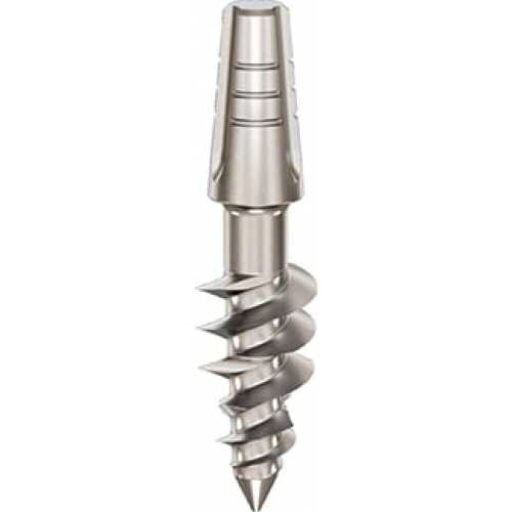
Cortical bone is the hard, dense outer layer of the jawbone. It is the part that basal implants rely on for strong, lasting support, and it is the reason many patients with bone loss can still receive fixed teeth without a bone graft.
Cortical Bone For Basal Dental Implants
Cortical bone is the compact outer shell of the jaw. It sits over the softer cancellous bone underneath and forms the structural frame of both the upper and lower jaw. It is dense, strong, and slow to resorb after tooth loss.
This is why cortical bone is so important in basal implantology. Being denser and less prone to resorption, it provides reliable anchorage for basal implants and removes the need for bone grafting in many cases.
Cortical Bone Location
Where exactly does my implant grip the bone?
Cortical bone runs through specific zones of both jaws. The main anchorage sites used in basal implantology are:
- The anterior mandible, especially the interforaminal region between the mental foramina (classic D1)
- The mandibular symphysis and parasymphysis, with thick buccal and lingual plates
- The basal mandibular cortex deeper in the lower jaw
- The nasal floor cortex above the upper front teeth
- The palatal cortical plate
- The pterygoid process and tuberosity-pterygoid junction behind the upper back teeth
- The vertical process of the palatine bone
These structures stay solid even after years of tooth loss, which is what makes them useful for implant anchorage. Our anatomy overview describes each site in more detail.
Cortical vs Cancellous Bone
How does cortical bone compare to the soft bone inside my jaw?
The two types behave very differently:
| Feature | Cortical bone | Cancellous bone |
|---|---|---|
| Structure | Dense, compact | Soft, spongy |
| Location | Outer shell, deeper cortical plates | Inside the jaw, near tooth sockets |
| Blood supply | Lower | Higher |
| Resorption after tooth loss | Minimal | Significant within 18 months |
| Role in basal implants | Primary anchorage | Secondary support if healthy |
| Role in conventional implants | Limited | Main anchorage |
Basal implants are designed to reach past resorbed cancellous bone and lock into cortical bone instead. That is the key difference from conventional implantology.
Cortical Bone and the D1 to D4 Classification
Where does cortical bone fit into the bone density system my dentist uses?
Dentists describe jawbone using four density grades, D1 through D4. The grades describe the balance between cortical and cancellous bone:
- D1 bone: very dense cortical bone with very little trabecular component
- D2 bone: thick porous cortical bone with strong trabecular bone inside
- D3 bone: thin cortical layer over fine trabecular bone
- D4 bone: mostly soft trabecular bone with little cortical support
Cortical bone dominates D1 and D2. It is still present, but thinner, in D3 and D4. Even in jaws classified as D4, deeper cortical structures remain available for anchorage.
Dental Conditions Linked to Cortical Bone
Which patients depend on cortical bone the most?
Cortical bone becomes especially important when the softer bone above it has been lost. Conditions that rely heavily on cortical anchorage include:
- Severe bone loss and bone atrophy, where the cancellous layer has resorbed
- Total edentulism, especially when patients have been missing teeth for years
- Advanced periodontitis and gum disease that has damaged the bone around the teeth
- Failed conventional implants or failed bone grafts that leave little usable cancellous bone
- Patients who smoke or have diabetes, where slower healing makes cortical fixation a safer option
In all of these situations, cortical bone gives the implant the immediate mechanical hold that compromised cancellous bone cannot.
Implant Brands and Series for Cortical Bone
Which implants are designed to work with hard, dense bone?
Different implant systems are designed for different bone conditions. For cortical anchorage, the most relevant series are:
- Ihde Dental BCS: designed for cortical fixation, used where the cortical structure is the main support
- BasalFix Basal: built for engagement of the basal or second cortical plate
- BasalFix TPI: specifically for tubero-pterygoid anchorage in the back of the upper jaw
- Monoimplant Smooth: suited to dense D1 and D2 bone, with sharp threads for mechanical engagement
- Monoimplant Microthread: for cortical penetration and immediate loading
- Ihde Dental TPG Uno: used in mixed zones where cortical and cancellous bone are both available
You can read more about each option on our basal implant brands page.
Clinical Case Study by Dr Genchev
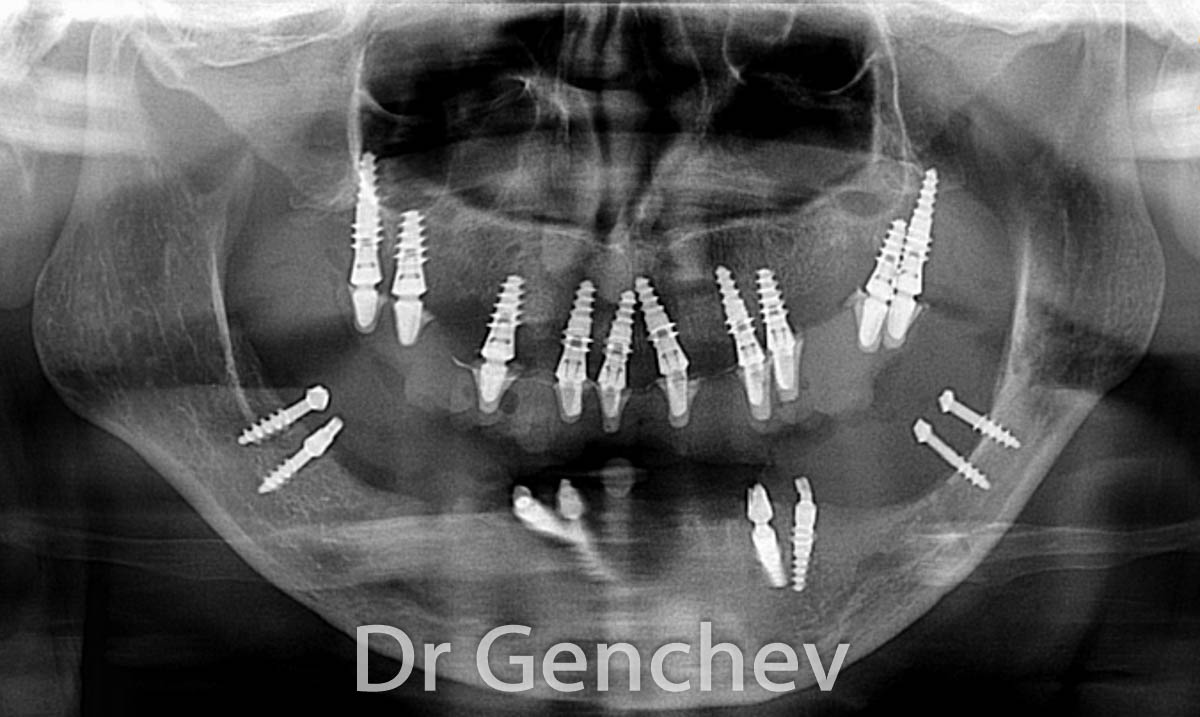
Paul is a French patient who had lost all his upper teeth and suffered three failed bone grafts in 🇹🇷 Turkey, 🇭🇺 Hungary and 🇫🇷 France. The graft material never hardened. No French implant dentist would accept his case.
Dr Genchev in 🇧🇬 Bulgaria treated Paul with 18 basal implants in five days. He placed 15 implants along the upper jaw and added 3 tubero-pterygoid implants behind the sinuses to anchor into the dense pterygoid bone at the back of the skull. He used Ihde Dental KOS and TPG implants and avoided every failed graft site.
Cortical bone made the case possible. The cancellous bone Paul had relied on for conventional implants was gone. The deeper cortical structures were untouched and gave the basal implants immediate, solid fixation. Read the full Paul case study for more.
Frequently Asked Questions on Cortical Bone
Why is cortical bone important in basal implantology?
Cortical bone is denser and less prone to resorption than cancellous bone, so it provides strong anchorage for basal implants. This removes the need for bone grafting in many cases, especially for patients with severe bone loss.
Do I need a bone graft if I have enough cortical bone?
No. One of the main advantages of basal implants is that they don’t require bone grafting, even with severe bone loss, because they use the cortical bone that is already there rather than added bone volume.
Case Studies For Basal Dental Implants
and Cortical Bone
-
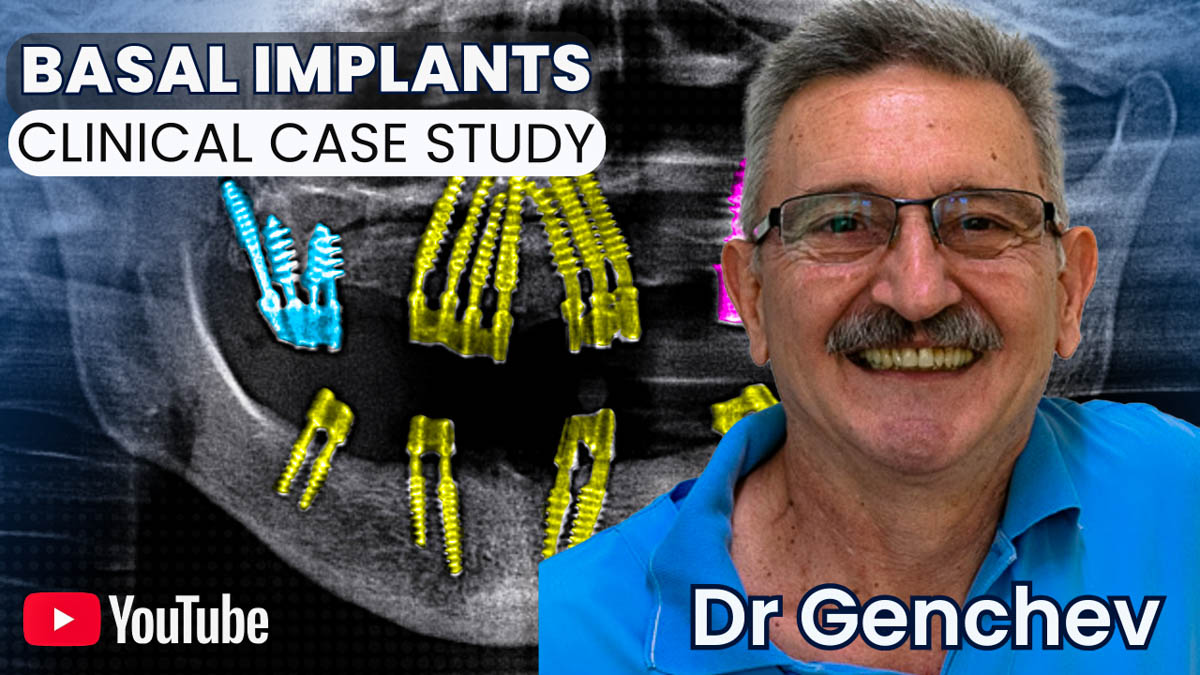
Basal Implants for Edentulism and Bone Atrophy
Clinical case study of Dr Genchev’s basal implant protocol for total edentulism and severe bone atrophy
-
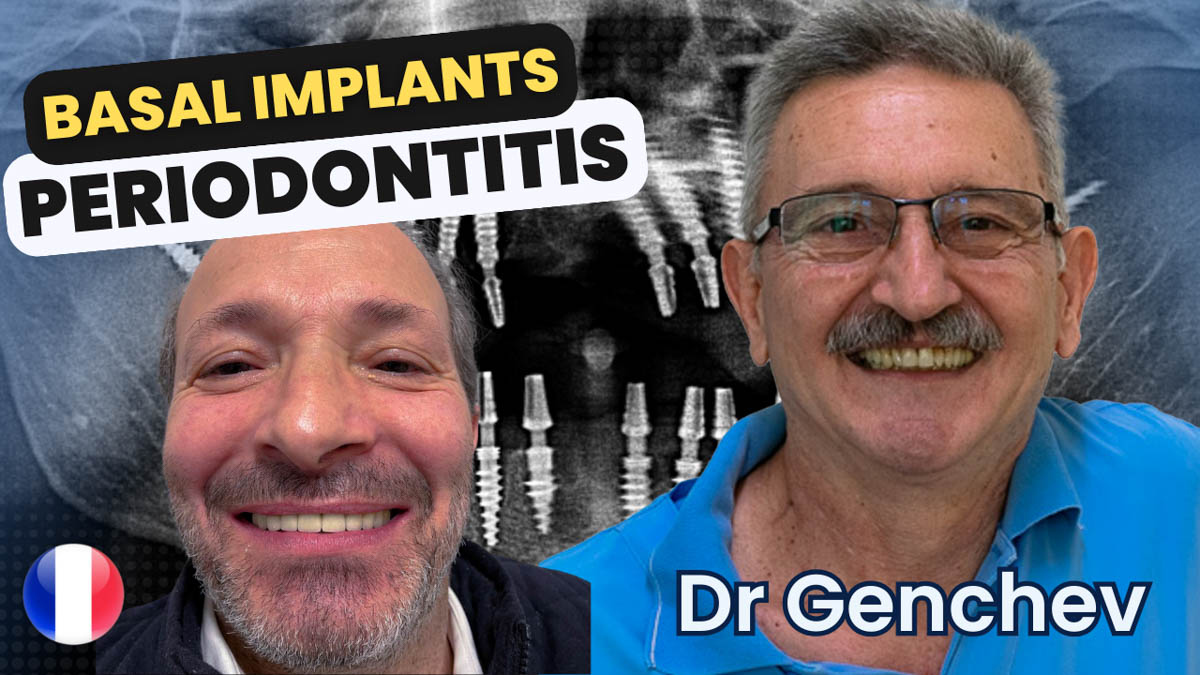
Basal Implants for Gum Disease
Dr. Genchev placed 25 basal dental implants, two permanent metal-ceramic bridges, and recreated Marc’s smile when he was a younger man, in one single 5-day visit in Plovdiv Bulgaria.
-
Dr Genchev Lower Jaw Restoration
Dr. Genchev transformed Aline’s life in just 5 days with basal implants, completing the lower jaw restoration that another basal implant dentist had declared too difficult.
-
Dr Genchev Bone Atrophy Treatment with Basal Implants
Dr Genchev in Bulgaria successfully rehabilitates with basal implants Paul’s maxillary who suffered from severe bone atrophy and had experienced 3 failed bone grafts. Full dental restoration in 5 days for €6,500. Real case study showing why basal implants succeed where conventional implants fail.
-
Dental restoration for missing teeth and bone atrophy with basal implants
Dr Genchev completed the full mouth dental restoration for this patient who suffered from edentulism with severe bone atrophy in 1 visit of 5 days. The price for the full dental restoration was 8990 Euro.
