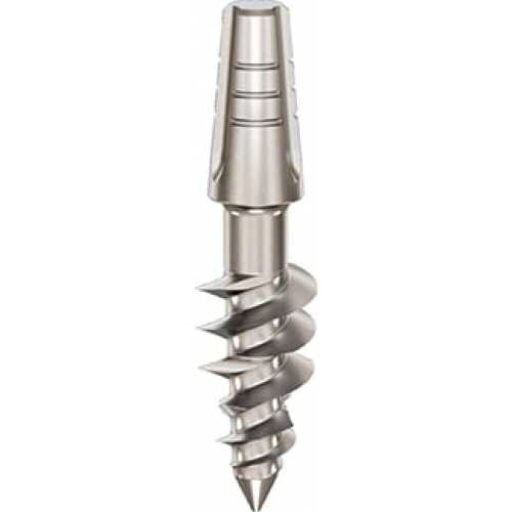
The TPG Uno implant series by Ihde Dental is a single-piece immediate-loading dental implant system designed for fixed prosthetic rehabilitation with circular bridges and bridge segments.
TPG Uno implants are made from highly resistant titanium alloy Ti6Al4V ELI and have a polished surface with a triple-thread design. The implant combines three important mechanical features:
- a sharp cutting crestal thread,
- an apical compression thread,
- a coronal micro-thread.
This design allows the implant to engage cortical bone, compress cancellous bone and seal the first cortical layer when placed in healed bone.
TPG Uno implants are not designed for single implant reconstruction. Their clinical use is intended for splinted fixed prosthetics, such as full-arch bridges or multi-unit bridge segments, where enough implants are connected together to distribute occlusal forces safely.
Anatomical Locations For TPG Uno Implants
TPG Uno implants may be used in both:
- fresh extraction sockets,
- healed bone areas.
They are used in fixed prosthetic treatments, especially:
- circular bridges,
- full-arch restorations,
- bridge segments,
- immediate-loading prosthetic rehabilitation,
- cases where implants need to be splinted together.
In a clinical full-mouth restoration concept, TPG Uno implants may be used in areas where both cancellous and cortical bone are present, especially when the treatment plan requires a combination of cancellous bone compression and cortical fixation.
Bone Conditions For TPG Uno Implants
TPG Uno implants are designed for situations where primary stability can be achieved through a combination of bone engagement mechanisms.
They may be used in:
Fresh extraction sockets
The sharp cutting crestal thread is designed to engage the cortical walls of extraction sockets. This is useful when implants are placed immediately after extraction and need mechanical stability from the available socket anatomy.
Healed bone areas
In healed bone, the coronal micro-thread helps seal the first cortical layer. This may improve mechanical engagement in the crestal cortical bone.
Compressed cancellous bone
The apical compression thread is designed to provide stability in compressed spongious bone. This makes TPG Uno useful in areas where cancellous bone is present but needs mechanical condensation around the implant.
Cortical bone
The apical thread may also provide stability in cortical bone. This is important when anchorage is planned in stronger cortical structures rather than relying only on cancellous bone.
Anchorage Strategy
The anchorage strategy of TPG Uno implants is based on combined compression and cortical engagement.
The implant design supports three anchorage mechanisms:
1. Crestal cortical engagement
The sharp cutting crestal thread engages the cortical bone at the entrance of the osteotomy or extraction socket.
2. Apical compression
The apical compression thread condenses cancellous bone and provides mechanical stability in compressed spongious bone.
3. Cortical fixation
The apical part of the implant may also gain stability in cortical bone. This allows the implant to be used when cortical fixation is available as part of the treatment plan.
This makes TPG Uno different from a purely cancellous compression implant. It is designed to work where both cancellous compression and cortical support are clinically useful.
Immediate Loading Protocol
TPG Uno implants may be used in an immediate-loading protocol when the correct clinical conditions are present.
Immediate loading may be considered when:
- adequate loading conditions are present,
- enough implants are placed,
- the implants are splinted together,
- excellent primary stability is achieved,
- the prosthetic design distributes forces safely,
- the occlusion is carefully controlled.
This is why TPG Uno implants are used for circular bridges and segments rather than isolated single crowns.
The implant design supports immediate loading by combining cortical engagement and compression stability. However, immediate loading is not automatic. It depends on the number of implants, their distribution, the available bone, the prosthetic plan and the clinician’s assessment of primary stability.
Clinical Case Study: How Dr Genchev Used TPG Uno in Marie’s Full-Mouth Restoration
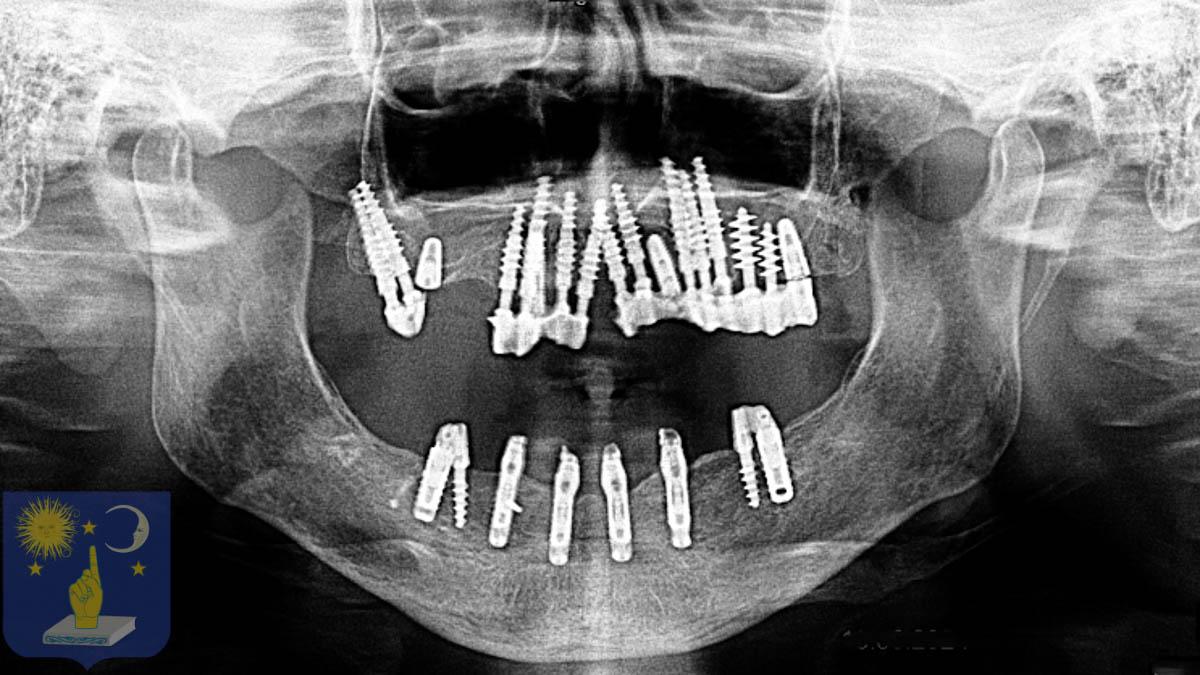
In Marie’s case, Dr Genchev treated a totally edentulous patient with severe bone atrophy using an immediate-loading full-mouth implant protocol. The treatment involved 22 basal implants from Ihde Dental and was completed with permanent PFM metal-ceramic bridges in 5 days.
The role of TPG Uno was very specific. Dr Genchev used TPG Uno implants in the left posterior maxilla, in positions 25, 26 and 27, because this area still had both cancellous and cortical bone available.
This made TPG Uno the appropriate implant choice for that zone. The threaded body of the implant was used to compress the cancellous bone, while the aggressive apical part of the implant was directed toward cortical anchorage. This allowed Dr Genchev to combine two stability mechanisms in the same region:
- compression of the cancellous bone around the implant body,
- cortical fixation at the apical part of the implant.
In this area, three TPG Uno implants were sufficient because they worked with both available bone layers: the cancellous bone layer and the cortical bone layer. Instead of relying only on bone volume, Dr Genchev selected implant dimensions and angulation according to the anatomical structures that could provide primary stability.
This illustrates the clinical logic of TPG Uno within a full-arch basal implantology protocol. It is not used as an isolated single-tooth implant. It is used as part of a splinted immediate-loading bridge, where several implants work together to stabilize the prosthetic construction.
After all 22 implants were placed, the implants were joined with a photopolymer splint to reduce micro-movements during the first days after surgery. The high primary stability across the full jaw allowed the final fixed bridges to be placed 4 days after implantation.
In this clinical case, TPG Uno served as the implant system for the posterior maxillary zone where cancellous compression and cortical fixation could be combined. This makes it different from the BCS implants used on the opposite posterior maxilla, where only hard cortical bone remained, and from the KOS Root implants used in zones where cancellous compression was the main stability mechanism.
Case Studies For TPG Uno Ihde Dental Implants
-
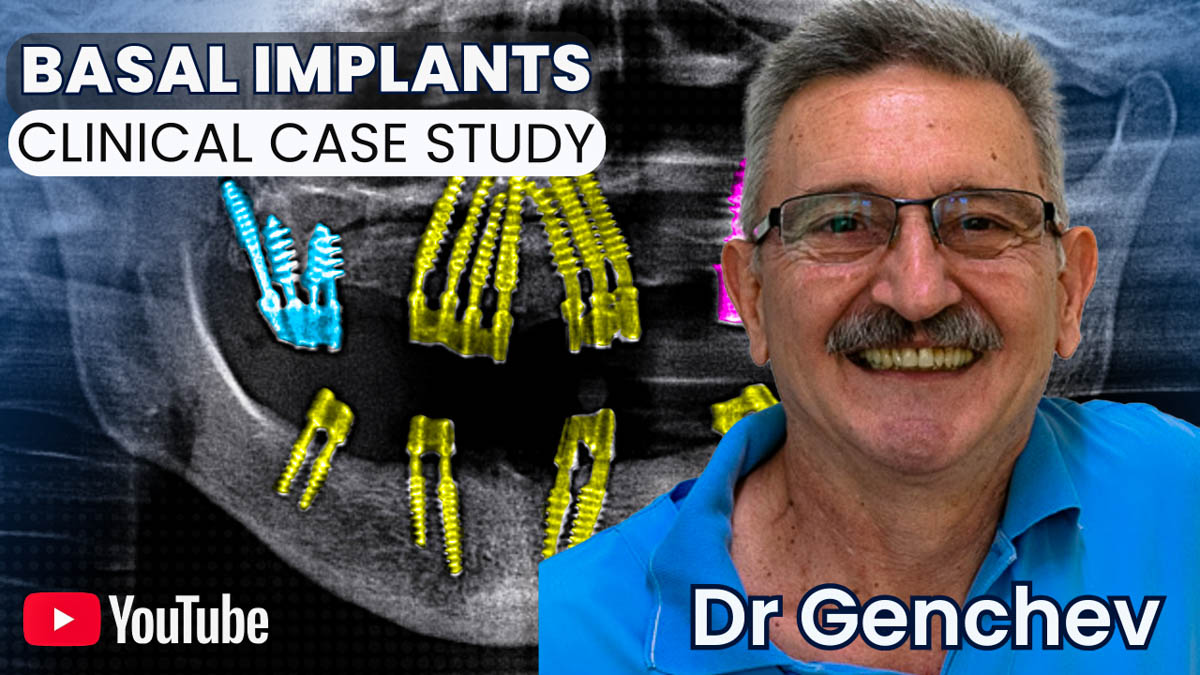
Basal Implants for Edentulism and Bone Atrophy
Clinical case study of Dr Genchev’s basal implant protocol for total edentulism and severe bone atrophy
-
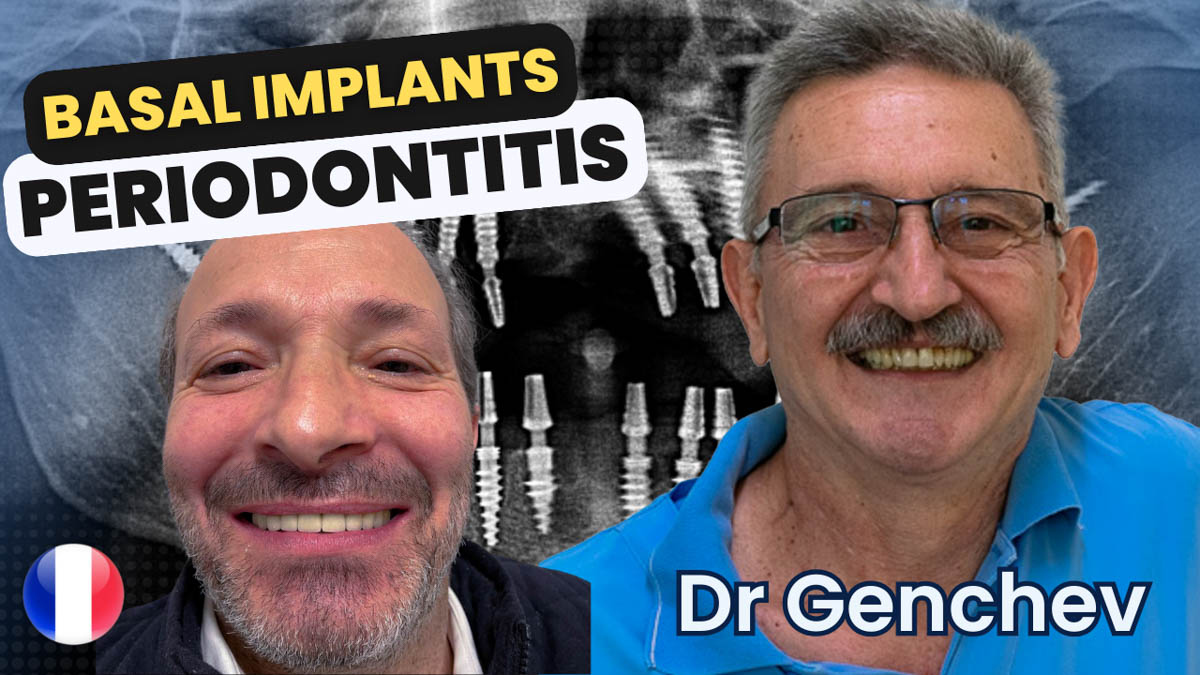
Basal Implants for Gum Disease
Dr. Genchev placed 25 basal dental implants, two permanent metal-ceramic bridges, and recreated Marc’s smile when he was a younger man, in one single 5-day visit in Plovdiv Bulgaria.
-
Dr Genchev Lower Jaw Restoration
Dr. Genchev transformed Aline’s life in just 5 days with basal implants, completing the lower jaw restoration that another basal implant dentist had declared too difficult.
-
Failed All-on-6 Saved with Basal Implants
Dr Genchev saved Françoise after she suffered a failed All-on-6 procedure. Full dental restoration with basal dental implants in 5 days treating prognathism for €9,990.
-
Dr Genchev Bone Atrophy Treatment with Basal Implants
Dr Genchev in Bulgaria successfully rehabilitates with basal implants Paul’s maxillary who suffered from severe bone atrophy and had experienced 3 failed bone grafts. Full dental restoration in 5 days for €6,500. Real case study showing why basal implants succeed where conventional implants fail.
-
Dr Genchev Dental Restoration for Gum Disease
Dr. Genchev transformed Véronique’s life in just 5 days with basal implants, restoring her ability to eat without pain and giving her back a confident smile.
-
Dental restoration for missing teeth and bone atrophy with basal implants
Dr Genchev completed the full mouth dental restoration for this patient who suffered from edentulism with severe bone atrophy in 1 visit of 5 days. The price for the full dental restoration was 8990 Euro.
