What should I know about dental implant risks before my procedure?
Understanding the risks associated with dental implants helps you make informed decisions about your treatment. While dental implants have high success rates, all surgical procedures carry some level of risk. Basal implants offer significant safety advantages by avoiding the need for bone grafting, sinus lift, and zygomatic implants, which are the primary sources of complications in conventional implantology. By choosing basal implants, you eliminate multiple risk factors and benefit from a simpler, safer procedure.
Dental Implants Risks
What are the risks associated with dental implants in general?
All dental implants, whether basal or conventional, share certain basic surgical risks. These include infection at the implant site, which can occur when bacteria enter during or after surgery. Proper sterilization and post-operative care significantly reduce this risk. Nerve damage is another potential complication, though rare, which can cause numbness or tingling in the lips, tongue, or chin if nerves are affected during placement.
Implant failure occurs when the implant does not integrate properly with the bone. This happens in approximately 2-5% of cases and is more common in patients with uncontrolled diabetes, those who smoke heavily, or individuals taking certain medications that affect bone metabolism. Excessive bleeding during surgery is uncommon but possible, especially in patients with bleeding disorders or those taking blood-thinning medications. These general risks apply to both basal and conventional implants, though the actual risk level differs significantly based on the technique used.
Basal Implants Risks
Are there specific risks associated with only basal implants?
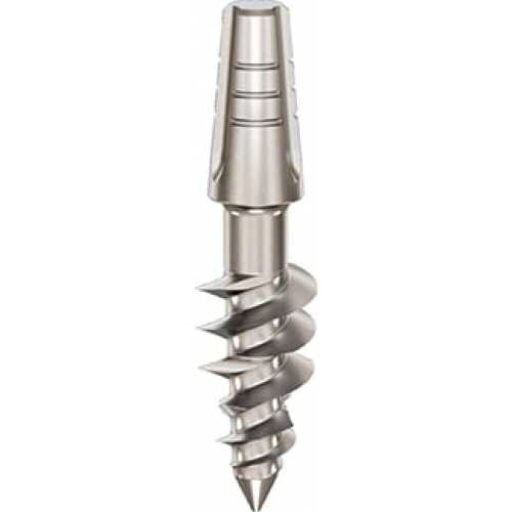
Basal implants have remarkably low risk profiles compared to conventional implants because they avoid the major complications associated with bone grafting, sinus lift, and zygomatic implants. The primary consideration with basal implants is that they require specialized training for proper placement. Not all dentists are qualified to place basal implants, which means choosing an experienced basal implant dentist is essential for success.
The longer length of basal implants means careful planning is required to avoid anatomical structures. However, experienced basal implant dentists navigate this easily using proper imaging and surgical protocols. The smooth surface of basal implants in the transmucosal region actually reduces the risk of peri-implantitis compared to conventional implants with rough surfaces. Because basal implants are fixed in the stable cortical bone, they have lower failure rates than conventional implants placed in soft cancellous bone that can resorb over time.
Conventional Implants Risks
What specific risks are associated with conventional implants?
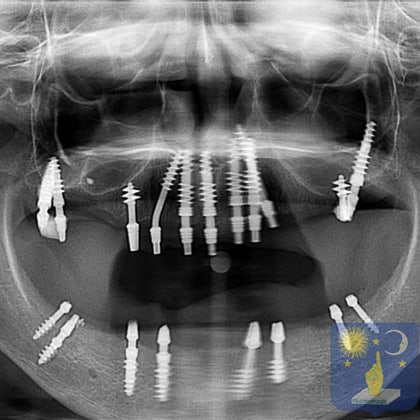
Conventional implants carry significantly higher risks, primarily because they often require additional procedures like bone grafting and sinus lift when patients have bone loss. Conventional implants are placed in the soft cancellous bone that naturally resorbs after tooth loss. This creates instability and increases the risk of implant failure, especially in patients with advanced bone loss or periodontal disease.
Peri-implantitis is a major concern with conventional implants. This inflammatory condition affects the tissue around the implant and can lead to bone loss and implant failure. The rough surface of conventional implants, designed to promote bone integration, also creates areas where bacteria can accumulate and cause infection. Conventional implants placed with the All-on-4 or All-on-6 systems use only 4-6 implants per jaw, which concentrates chewing forces on fewer points and increases stress on each implant. This mechanical overload can lead to bone loss around the implants and eventual failure.
The risks of bone grafting
What are the risks of bone grafting?
Bone grafting procedures add significant risks to conventional implant treatment. Infection is the most common complication, occurring in 3-10% of bone graft procedures. The grafted bone material can become infected during placement or fail to integrate properly with your existing bone. When infection occurs, the graft must often be removed, delaying your implant treatment by months and requiring additional surgery.
Graft failure is another major risk. Studies show that 20-30% of bone grafts fail to integrate properly, especially in patients with severe bone loss or compromised healing. The grafted material may remain as loose particles rather than forming solid bone, providing an unstable foundation for implants. Nerve damage can occur during bone harvesting if the graft material comes from your own body. Chronic pain at the harvest site affects many patients for months after the procedure. Prolonged swelling and bruising are common, and the extended healing time of 4-6 months increases the overall treatment timeline significantly while adding substantial cost to your procedure.
The risks of a sinus lift
What are the risks of a sinus lift?
Sinus lift procedures carry unique complications that make them one of the riskiest aspects of conventional implant treatment. Sinus membrane perforation occurs in 10-35% of sinus lift procedures, even with experienced surgeons. When the delicate sinus membrane tears during the procedure, it compromises the entire graft and can lead to chronic sinusitis. The risk of sinus infection increases significantly after a sinus lift, with many patients experiencing recurring infections that require antibiotics or additional surgery.
Chronic sinusitis develops in approximately 5-10% of patients after sinus lift procedures. This creates ongoing problems with nasal congestion, facial pressure, and headaches that can persist for years. The grafted bone material can shift or fail to solidify properly, especially if the sinus membrane was perforated during placement. Excessive bleeding is more common with sinus lifts than other dental procedures due to the rich blood supply in the sinus area. Post-operative pain and swelling tend to be more severe and prolonged compared to other implant procedures, affecting your quality of life during the long healing period of 6-8 months.
The risks of zygomatic implants
What are the risks of zygomatic implants?
Zygomatic implants present the highest risk profile in conventional implantology. These extremely long implants pass directly through the maxillary sinus cavity to anchor in the cheekbone, creating a direct pathway between your oral cavity and sinuses. Chronic sinusitis is a major concern, with studies showing significantly higher rates of sinus problems in zygomatic implant patients compared to other implant types. The implant essentially creates a permanent opening through your sinus, increasing susceptibility to infections.
Sinus perforation and damage to the sinus lining occur frequently during zygomatic implant placement due to the invasive nature of the procedure. Nerve damage risk is elevated because the implant path runs close to facial nerves, potentially causing numbness, tingling, or pain in the cheek and upper teeth area. The complex surgical technique requires exceptional skill and experience, yet complication rates remain higher than with other implant approaches. Vision disturbances have been reported in rare cases when implants are placed too close to the eye socket. The challenging removal process if failure occurs adds another layer of risk, as removing a failed zygomatic implant is far more complicated than removing shorter conventional implants.
Comparison of Risks: Basal vs Conventional Implants
Why are basal implants effectively less risky than conventional implants?
Basal implants demonstrate superior safety profiles by eliminating the major risk factors associated with conventional implantology. The fundamental advantage of basal implants lies in their ability to bypass the soft cancellous bone that causes most complications in conventional implantology. By anchoring directly in the hard cortical bone, basal implants avoid the need for bone augmentation procedures that account for the majority of implant-related complications. You receive a safer procedure with fewer surgical interventions, shorter treatment time, and significantly reduced risk of chronic complications like sinusitis or graft failure.
Conventional implants require multiple procedures spread over 8-12 months, with each surgery creating new opportunities for complications. The bone graft can fail, the sinus lift can cause chronic infections, and the implants themselves can fail if placed in insufficient bone. Basal implants eliminate these cascading risks by providing a single-stage solution that works even with severe bone loss. The immediate loading capability means your implants are stabilized quickly under a dental bridge, promoting faster healing and reducing the risk of implant movement or failure.
For patients with diabetes, smoking history, or compromised immune systems, basal implants offer even greater safety advantages. These conditions significantly increase complications with bone grafting and healing, making conventional implants far riskier for these patient groups. Basal implants’ placement in cortical bone and immediate loading protocol make them suitable for patients who would otherwise face extremely high failure rates with conventional approaches.