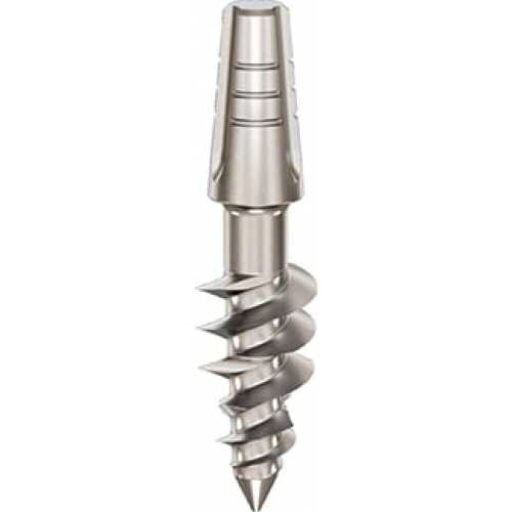
Can I have dental implants if I’ve lost too much bone?
Basal dental implants offer the best solution for patients suffering from severe bone atrophy. Unlike conventional implants that require expensive bone grafting procedures, basal implants are fixed directly into the hard cortical bone of your jaw. This means you can get a complete set of new teeth in just 3-5 days without additional surgeries. Basal implants avoid the need for bone grafting, sinus lift, and zygomatic implants.
the benefits of Basal Implants to treat Bone Loss
Why choose basal implants for bone loss?
Basal implants are specially designed for patients who suffer from severe bone atrophy after tooth loss. The main advantage is that basal dental implants are longer than conventional implants and are fixed into the cortical bone, which is the hard, deep bone of your jaw. This cortical bone does not disappear after tooth loss like the soft cancellous bone does.
With basal implants, you avoid months of healing time, multiple surgeries, and the high costs associated with bone grafting and sinus lift procedures. And you avoid the risk of complications associated with zygomatic implants. You get immediate results with a full set of functional teeth that restore your ability to eat normally and smile with confidence.
What is Bone Atrophy?
How does my jawbone lose density after tooth loss?
Bone atrophy is the loss of bone density and volume in your jaw after you lose teeth. When your teeth are gone, the bone cells of the jaw bone are no longer stimulated to regenerate and its volume shrinks. Without this stimulation, the soft cancellous bone that held the root of your teeth begins to break down and disappear.
Over time, this reabsorption causes real problems. Remaining teeth can shift or loosen. Your facial profile can change shape. And the bone that’s left often becomes too thin for a conventional implant without additional grafting.
How does bone loss occur?
What causes my jawbone to shrink after losing teeth?
Bone loss happens because your teeth and their roots provide essential stimulation to your jawbone. When you chew, the pressure travels through your tooth roots into the jaw bone, keeping the bone cells active and healthy. Once a tooth is lost, this stimulation stops, and your body begins to reabsorb the bone tissue.
This bone resorption creates serious problems. Your remaining teeth become unstable and may shift position or fall out. Your facial structure changes, making you look older. The jawbone becomes too thin to support conventional dental implants without additional procedures like bone grafting.
Bone Type D1 and D2
What does my bone type mean for my treatment?
Dentists classify jaw bone into four density types, from D1 (the hardest) to D4 (the softest). D1 and D2 bone are the two types basal implantologists rely on most for cortical anchorage.
D1 bone is very dense cortical bone with a limited trabecular layer. It’s most commonly found in the anterior mandible, particularly the mandibular symphysis and parasymphysis, the region between the two mental foramina. This bone gives strong mechanical resistance, though it needs a careful drilling protocol since dense cortical bone has less blood supply than cancellous bone.
D2 bone combines a thick, porous cortical shell with a strong trabecular core underneath. It’s often considered one of the more favorable conditions for implant placement, since it offers good mechanical support along with better vascularity than pure cortical bone. D2 bone is common in the anterior mandible, the mandibular body and the premolar region.
In a jaw with severe atrophy, D1 and D2 bone are frequently what remain after the softer cancellous bone has resorbed. This is precisely the bone your basal implantologist targets.
Key Anatomical Structures For Cortico-Basal Implants
Where do basal implants get their strength if the alveolar bone is gone?
When alveolar bone has resorbed, your dentist looks for deeper cortical structures that never disappear. These structures come from the mandible, the maxilla, and the base of the skull itself.
The mandibular symphysis and mylohyoid line. In the lower jaw, the symphysis and parasymphysis hold dense D1 cortical bone that survives even severe atrophy. Further back, the mylohyoid line, a cortical ridge on the inner surface of the mandible, stays densely mineralized long after the alveolar ridge above it has resorbed. An implant angled to reach this ridge can anchor firmly in a zone that would otherwise be too shallow for a conventional implant.
The pterygoid process and the tuberosity-pterygoid junction. In the upper jaw, this bony projection descends from the sphenoid bone, just behind the maxillary tuberosity. Because it connects to the base of the skull, it never resorbs, no matter how much maxillary bone has been lost. Implants anchored here restore back-tooth function without touching the sinus.
The pyramidal process. A compact projection of the palatine bone, sitting where the palatine bone, maxilla and sphenoid meet. It offers a second cortical anchor point in the mid-posterior maxilla, mapped individually with CBCT imaging.
The nasal floor cortex. In the front of the upper jaw, this dense bony floor sits above the roots of the upper incisors and canines. An implant tip fixed into this cortex, combined with compression of the cancellous bone below, gives strong two-point stability in a zone where ridge width is often limited.
Basal Implant Brands for Bone Atrophy
Which implants does my dentist use for my case?
No single implant works for every zone of an atrophied jaw. Experienced basal implantologists match the implant type to the bone actually present at each position.
🇨🇭 Ihde Dental (Switzerland) produces three systems used together in Full Dental bone atrophy cases:
- BCS, for zones where only hard cortical bone remains, including tubero-pterygoid anchorage
- KOS Root, for zones with cancellous bone that can be compressed, often with added cortical anchorage at the tip
- TPG Uno, for zones with both cancellous and cortical bone available, used in splinted bridge segments
🇮🇹 BasalFix (Italy) offers four series aimed at different bone conditions:
- Basal, for zones where cancellous bone has fully resorbed
- Compressive, for zones with healthy cancellous bone
- Compressive-Fix, for transition zones between dense and atrophied bone
- TPI, for tubero-pterygoid anchorage in the posterior maxilla
🇨🇭 Monoimplant (Switzerland) builds on bicortical anchorage, stabilizing each implant between two cortical layers:
- Smooth, suited to hard D1 and D2 bone
- Microthread, used where cortical penetration and socket wall support matter
- Rough and MOT, generally used in softer D3 and D4 zones
A Full Dental case with severe bone atrophy often needs implants from more than one of these families, sometimes within the same jaw.
Basal Implants vs Conventional Implants
| Basal Implants | Conventional Implants | |
|---|---|---|
| Implant length | Up to 52mm, fixed in cortical bone | 8-15mm, placed in cancellous bone |
| Treatment timeline | 3-5 days | 8-12 months, including grafting and healing |
| Implants per jaw | 8-12 | 4-6 (All-on-4/All-on-6) |
| Extra procedures | None | Bone graft and sinus lift often required |
| Back-tooth support | Full, including molars | Often limited, bridge cantilevered |
No Bone Graft, No Sinus Lift, No Zygomatic Implants
What extra procedures do I avoid with basal implants?
Conventional treatment for severe bone loss usually means bone grafting, sinus lift surgery, or, in the most advanced cases, zygomatic implants that anchor into the cheekbone. Each of these adds months of healing and extra surgical risk.
Basal implants avoid all three. Because they anchor in cortical bone that’s already there, there’s nothing to rebuild first. Pterygoid implants placed behind the sinus replace the role of a sinus lift. And because pterygoid anchorage delivers strong, immediate stability without passing through the sinus, there’s no need for zygomatic implants either.
Case Study: Marie’s Full Restoration in 5 Days
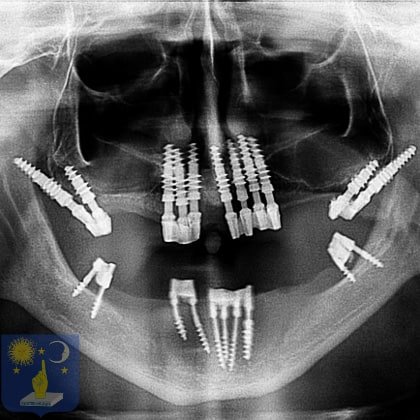
Marie, a patient from 🇫🇷 France, arrived at Dr Genchev’s clinic in 🇧🇬 Bulgaria totally edentulous, with severe bone atrophy in both jaws. Using a 2D panoramic X-ray, Dr Genchev mapped the bone quality zone by zone and selected the implant type that matched each area.
In the lower jaw, KOS Root implants anchored into the mylohyoid line at the back and across the cancellous bone at the front. In the upper jaw, BCS implants reached the pterygoid process on the right side, TPG Uno implants engaged the pterygoid process and pyramidal process on the left, and seven KOS Root implants across the front anchored into the nasal floor cortex.
In total, Dr Genchev placed 22 basal implants in about 2 hours. He joined them together immediately to prevent micro-movement, and 4 days later fitted permanent PFM metal-ceramic bridges, 14 crowns per jaw, also correcting a reverse bite in the process. Marie left with a complete, functional set of teeth in under a week, with no bone graft and no sinus lift involved.
Treatment for Missing Teeth and Bone Atrophy
What are my options to replace missing teeth when I also suffer from a lack of bone?
When you have severe bone loss, your treatment options become limited. Conventional dental implants require sufficient bone volume to anchor properly, which means most patients with bone atrophy need bone grafting first. However, bone grafting is expensive, takes 4-6 months to heal, and often fails in patients with advanced bone loss.
Basal dental implants provide the ideal solution because they work differently. Instead of relying on the soft bone that has disappeared, basal implants are fixed into the deeper cortical bone. This hard bone layer is unaffected by tooth loss and provides excellent stability for basal implants.
The treatment is straightforward. Your dentist places 8-10 basal implants along the full length of your jaw, including tubero-pterygoid implants behind your sinuses to replace back teeth. Within 3-5 days, you receive your permanent dental bridge with a full set of teeth. You can eat normally and return to your daily life immediately.
Advantages of Basal Implants for Bone Loss
How do basal implants compensate for my lack of bone?
Basal implants offer multiple advantages that make them superior to conventional implants for patients with bone loss. The key benefit is that you avoid all the additional procedures conventional dentists would require, such as bone grafting, sinus lift, and zygomatic implants.
Because basal implants are longer and fixed into cortical bone, they provide immediate stability. Your dentist can place all the implants and attach your temporary bridge on the same day. Within a few days, you receive your permanent bridge and can begin eating normally. The entire process takes just one week instead of 8-12 months with conventional implants and bone grafting.
NO Bone Graft
Why do basal implants avoid the need for bone grafting?
Basal implants eliminate the need for bone grafting because they do not rely on the soft cancellous bone. Conventional implants are short and must be placed in the soft bone that holds tooth roots. When this bone has resorbed due to tooth loss, conventional dentists have no choice but to perform bone grafting to rebuild the missing bone volume.
Basal implants solve this problem completely. Because they are longer, they reach down into the cortical bone layer that remains strong and intact regardless of how much soft bone you have lost. The cortical bone provides excellent anchorage without any need for grafting procedures. You save time, money, and avoid the pain and risks of additional surgeries.
NO Sinus Lift
Why do basal implants avoid the need for a sinus lift?
Sinus lift procedures are commonly required with conventional implants when placing implants in the upper back jaw. But, basal implants avoid sinus lift completely through strategic placement. Your dentist uses pterygoid implants that are positioned behind the sinuses rather than underneath them. These longer implants anchor into the pterygoid bone at the back of your jaw, providing excellent support for your back teeth without disturbing your sinuses. This approach is safer, faster, and more comfortable than sinus lift procedures.
NO Zygomatic Implants
Why are basal implants a better solution than zygomatic implants?
Zygomatic implants are extra-long implants that conventional dentists use when the upper jaw has severe bone loss. These implants pass through the maxillary sinus and anchor into the cheekbone (zygomatic bone) instead of the jaw. While this approach avoids bone grafting, it comes with an increase in the risk of complications.
Basal implants provide a better alternative. Instead of passing through the sinuses like zygomatic implants, basal implant dentists use pterygoid implants that are positioned behind the sinuses. This approach eliminates the risk of complications and chronic infection like sinusitis.
Tubero-pterygoid Implants
How do tubero-pterygoid implants compensate for the lack of bone?
Tubero-pterygoid implants are specialized basal implants that are fixed behind the sinuses in the pterygoid bone. This bone is located at the very back of your upper jaw and remains dense and strong even when you have lost significant bone in the front areas because it is part of the cranium.
These longer implants allow your dentist to recreate the full functionality of your mouth, including the back molar teeth that are essential for chewing.
Disadvantages of conventional dental implants
What are the limitations of conventional dental implants for treating patients with bone loss?
Conventional dental implants face serious limitations when treating patients with severe bone loss. The fundamental problem is that conventional implants are short and designed to be placed in the soft cancellous bone that holds natural tooth roots. When this bone has resorbed due to tooth loss, conventional implants have no stable foundation.
To compensate for inadequate bone, conventional dentists must perform bone grafting and sinus lift procedures. These add 4-6 months to your treatment timeline, double or triple the cost, and carry significant risks of failure. Even with bone grafting, the success rate for conventional implants in patients with severe bone loss is lower than in patients with healthy bone.
The conventional approach also limits the number and placement of implants. Most conventional dentists use the All-on-4 or All-on-6 systems, which place only 4-6 implants in the front part of the jaw. This leaves the back areas unsupported, meaning you cannot chew properly with molar teeth. The bridge is cantilevered beyond the last implant, creating stress and increasing the risk of implant failure or bridge breakage.
Limitations of the All on 4 system
What are the problems of using the All on 4 system to treat bone loss?
The All-on-4 system has become popular in conventional implantology, but it has significant limitations for patients with severe bone loss. The system uses only four implants per jaw, with the back two implants angled to avoid the need for bone grafting in most cases.
However, four implants provide insufficient support for patients with severe bone atrophy. The forces of chewing are concentrated on just four points, which creates stress and increases the risk of implant failure over time. Additionally, because the implants are placed only in the front part of the jaw, the dental bridge must extend backward beyond the last implant to provide back teeth. This cantilevered design is mechanically weak and prone to breakage.
The All-on-4 system also fails to recreate the natural functionality of the mouth. Without implants supporting the back molar area, you cannot chew tough or fibrous foods properly. Many patients with All-on-4 report difficulty eating meat, raw vegetables, and other foods that require strong molar chewing. In contrast, basal implantology uses 8-12 implants per jaw, including pterygoid implants at the back, which provides superior stability and full chewing function.
Comparison of Basal and Traditional Dental Implants for Bone Loss
How do basal implants compare to conventional implants for my situation?
The differences between basal and conventional implants become most apparent in cases of severe bone loss. Understanding these differences helps you make an informed decision about your treatment.
Implant Length and Placement:
- Basal Implants: Long implants (up to 52mm) fixed in hard cortical bone
- Conventional Implants: Short implants (8-15mm) placed in soft cancellous bone
Treatment Timeline:
- Basal Implants: Complete restoration in 3-5 days with immediate loading
- Conventional Implants: 8-12 months including bone grafting, healing, and multiple surgeries
Number of Implants:
- Basal Implants: 8-12 implants per jaw for maximum stability
- Conventional Implants: 4-6 implants per jaw (All-on-4/All-on-6)
Additional Procedures Required:
- Basal Implants: None – no bone graft, no sinus lift, no zygomatic implants
- Conventional Implants: Bone grafting and sinus lift required for severe bone loss
Success Rate:
- Basal Implants: 95-98% success rate, even with severe bone loss
- Conventional Implants: Lower success rate when bone grafting is required
Chewing Function:
- Basal Implants: Full functionality including back molar teeth for normal chewing
- Conventional Implants: Limited back support, difficulty with tough foods
Cost:
- Basal Implants: Higher initial cost but no additional procedures
- Conventional Implants: Lower initial cost plus expensive bone grafting and sinus lift
Alternatives to dental implants
What are the alternatives to dental implants for treating missing teeth with severe bone loss?
When you have severe bone loss and missing teeth, your options are limited. Understanding the alternatives helps you appreciate why basal dental implants are often the best choice.
Removable Dentures: Traditional dentures are the most common alternative. They are held in place with adhesive and rest on your gums. However, dentures have significant disadvantages. They are uncomfortable, slip when eating or speaking, restrict your diet to soft foods, and continue to accelerate bone loss because they provide no stimulation to the jawbone. Over time, as bone continues to resorb, dentures fit even more poorly and become increasingly difficult to wear.
Fixed Bridges on Natural Teeth: If you have some remaining healthy teeth, a dentist might suggest grinding down adjacent teeth to support a fixed bridge. However, this sacrifices healthy teeth and only works if you have sufficient remaining teeth in good condition. It does nothing to stop bone loss in the areas where teeth are missing. And devitalized teeth have a shorter lifespan.
Do Nothing: Some patients choose to delay treatment. This is the worst option because bone loss accelerates once teeth are lost. The longer you wait, the more bone you lose, and eventually you may have so little bone that even basal implants become challenging to place. Early treatment with basal implants stops bone loss and preserves your remaining bone structure.
For most patients with severe bone loss, basal dental implants provide the only effective long-term solution that restores full function, stops bone loss, and avoids the need for uncomfortable dentures or additional grafting procedures. The investment in basal implants delivers results that last for many years and dramatically improves your quality of life.
FAQ Questions About Bone Atrophy and Basal Dental Implants
What is bone atrophy?
Bone Atrophy is the loss of bone density and volume, often associated with tooth loss and aging.
What is bone resorption?
Bone resorption is the breakdown and loss of bone tissue.
Why are basal implants a viable option for patients with significant bone loss?
Basal implants engage the deeper cortical bone, which is less prone to resorption, making them suitable for patients with significant bone loss who may not qualify for conventional implants.
Case Studies To Treat Bone Atrophy
with Basal Dental Implants
-
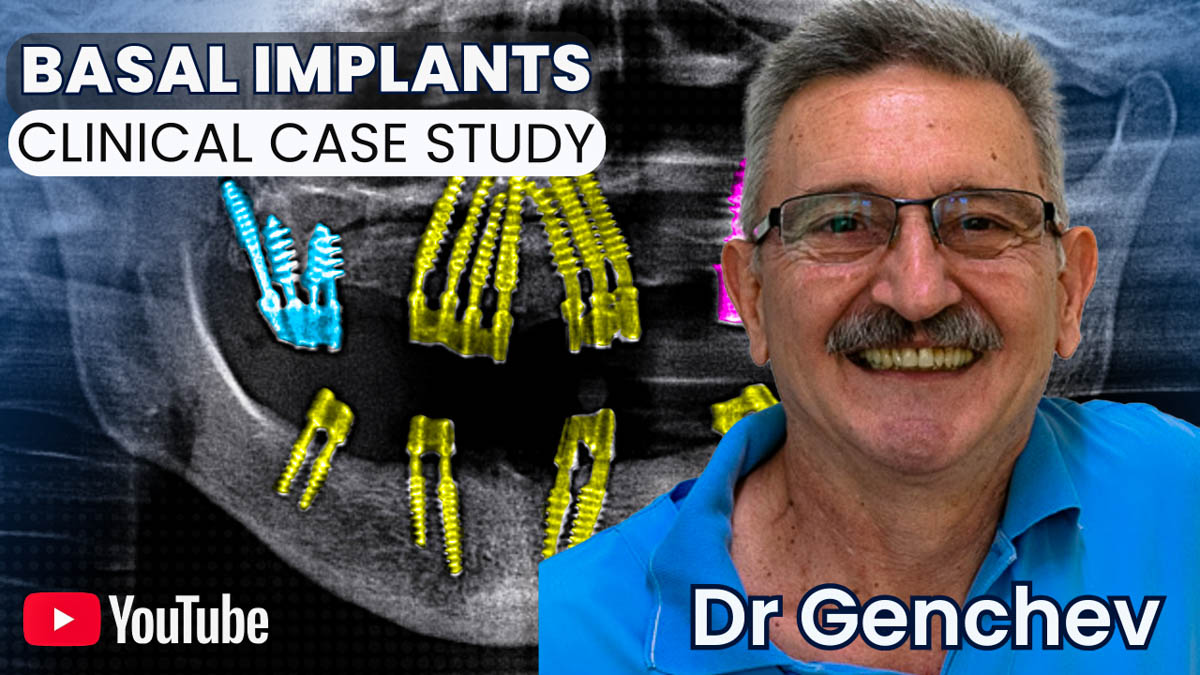
Basal Implants for Edentulism and Bone Atrophy
Clinical case study of Dr Genchev’s basal implant protocol for total edentulism and severe bone atrophy
-
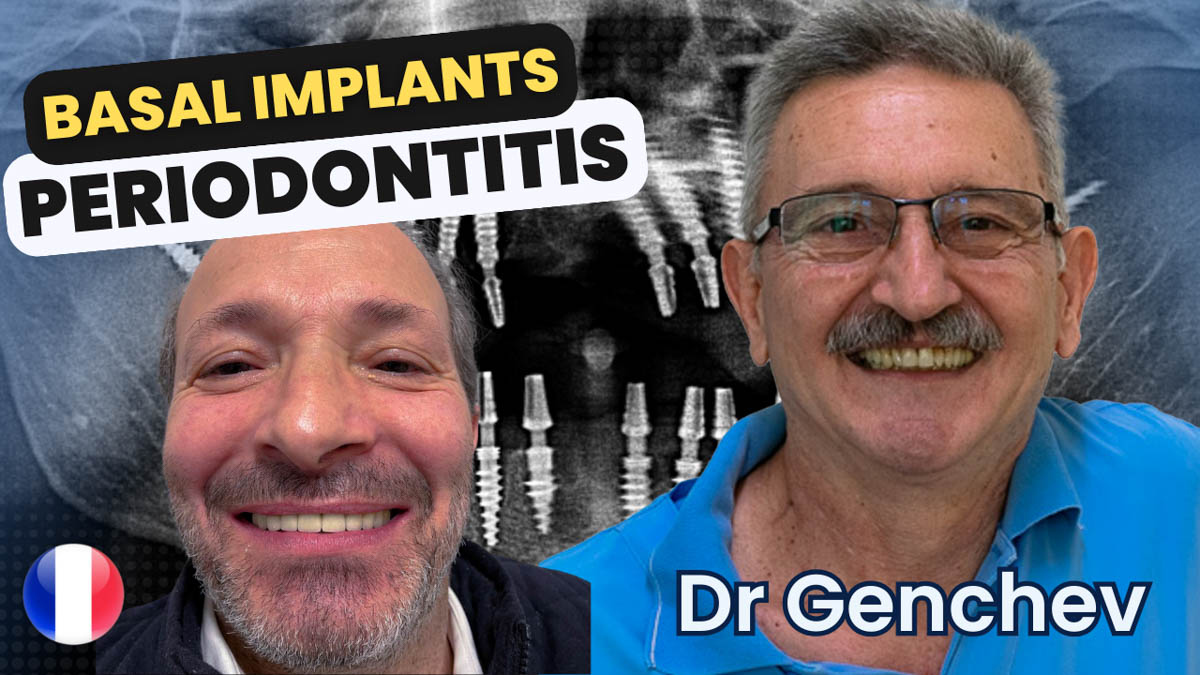
Basal Implants for Gum Disease
Dr. Genchev placed 25 basal dental implants, two permanent metal-ceramic bridges, and recreated Marc’s smile when he was a younger man, in one single 5-day visit in Plovdiv Bulgaria.
-
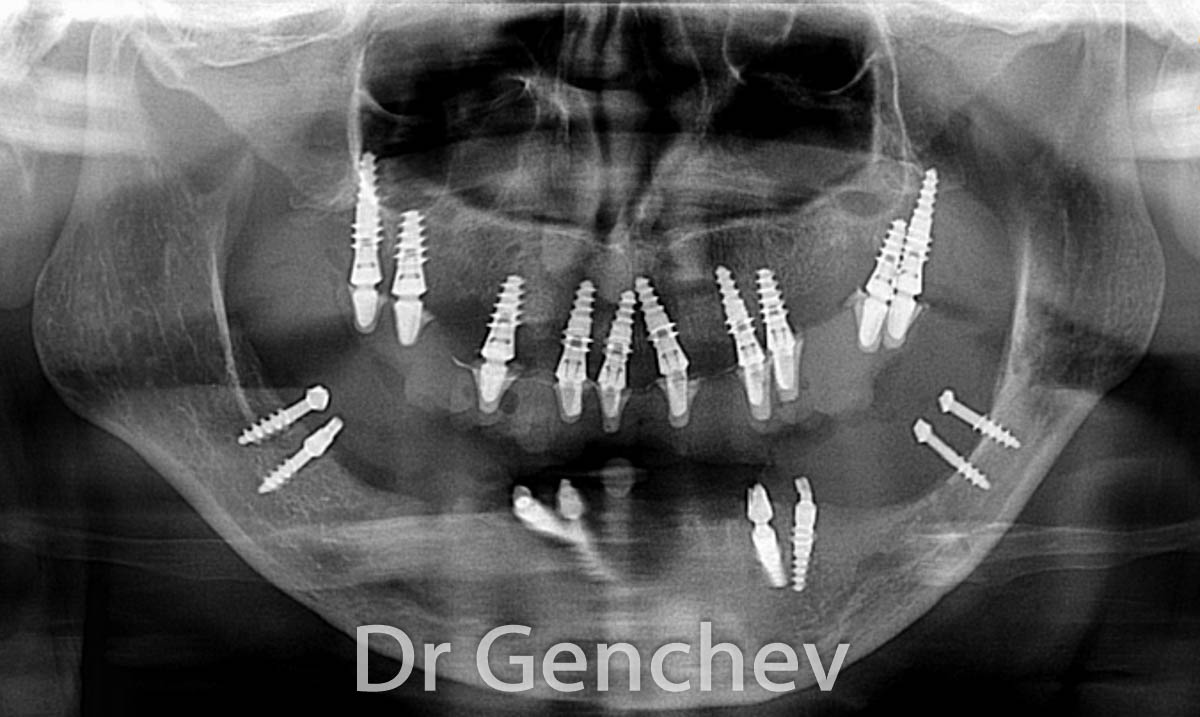
Dr Genchev Lower Jaw Restoration
Dr. Genchev transformed Aline’s life in just 5 days with basal implants, completing the lower jaw restoration that another basal implant dentist had declared too difficult.
-
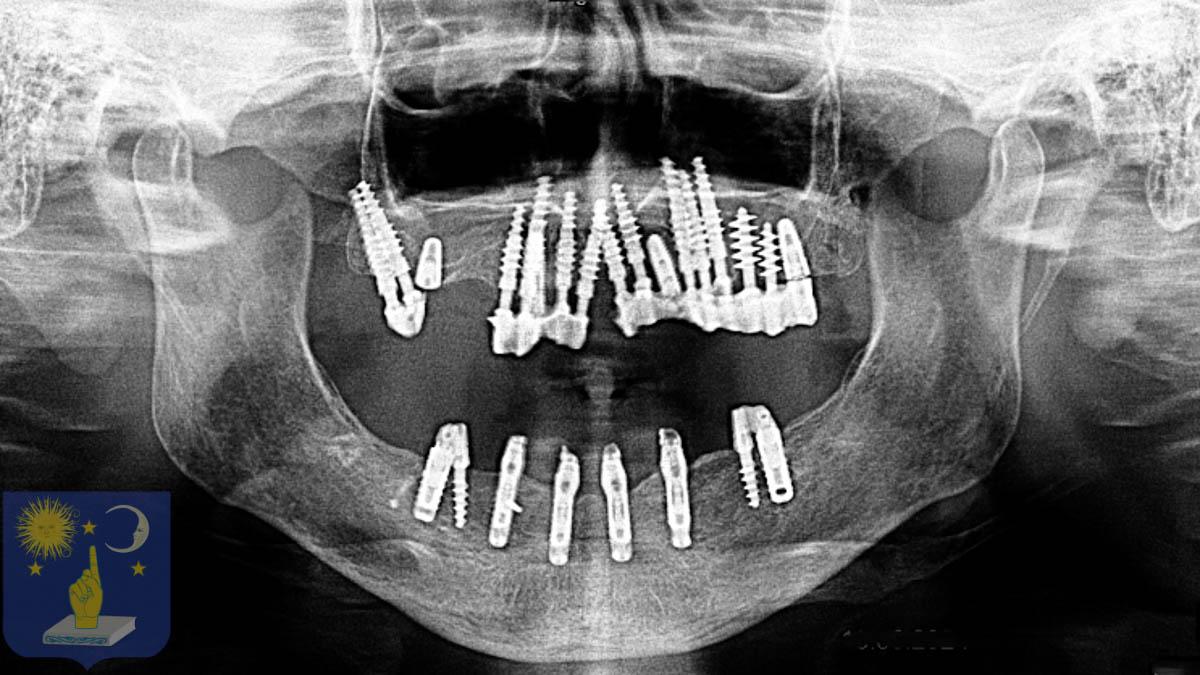
Failed All-on-6 Saved with Basal Implants
Dr Genchev saved Françoise after she suffered a failed All-on-6 procedure. Full dental restoration with basal dental implants in 5 days treating prognathism for €9,990.
-
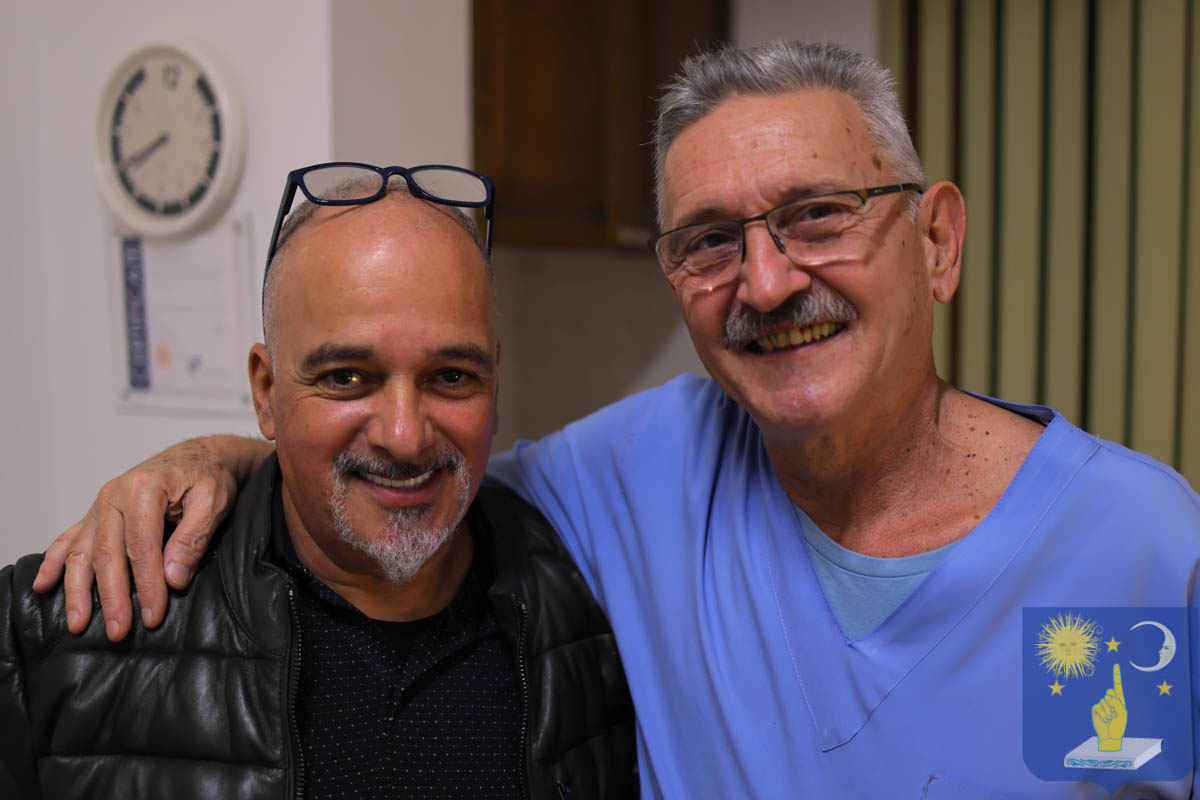
Dr Genchev Bone Atrophy Treatment with Basal Implants
Dr Genchev in Bulgaria successfully rehabilitates with basal implants Paul’s maxillary who suffered from severe bone atrophy and had experienced 3 failed bone grafts. Full dental restoration in 5 days for €6,500. Real case study showing why basal implants succeed where conventional implants fail.
-
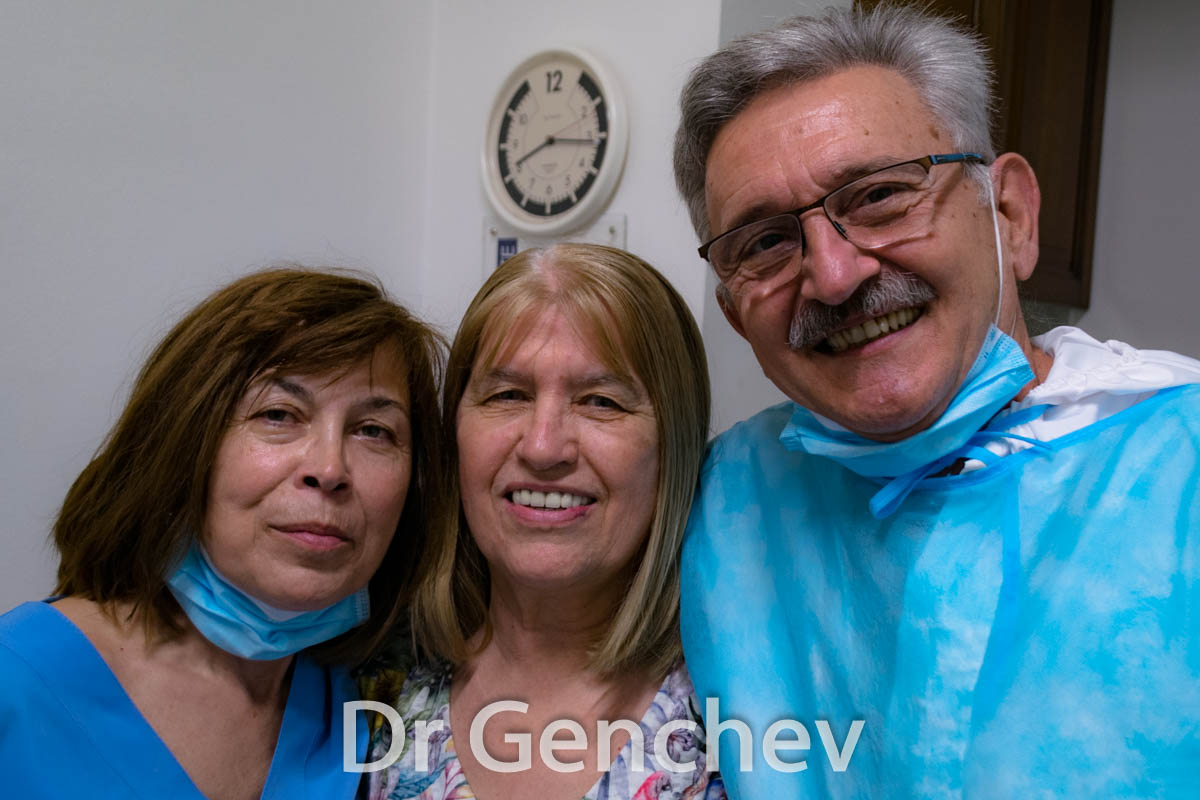
Dr Genchev Dental Restoration for Gum Disease
Dr. Genchev transformed Véronique’s life in just 5 days with basal implants, restoring her ability to eat without pain and giving her back a confident smile.
-
Dental restoration for missing teeth and bone atrophy with basal implants
Dr Genchev completed the full mouth dental restoration for this patient who suffered from edentulism with severe bone atrophy in 1 visit of 5 days. The price for the full dental restoration was 8990 Euro.
