Compressive dental implants give patients with missing teeth and bone loss a fast, reliable solution for a dental restoration without bone grafting and without waiting for months. Combined with basal implants, they allow dentists to treat even the most complex cases with a fixed bridge in as little as 3–5 days.
What Are Compressive Dental Implants?
How are compressive implants different from the implants my dentist has mentioned before?
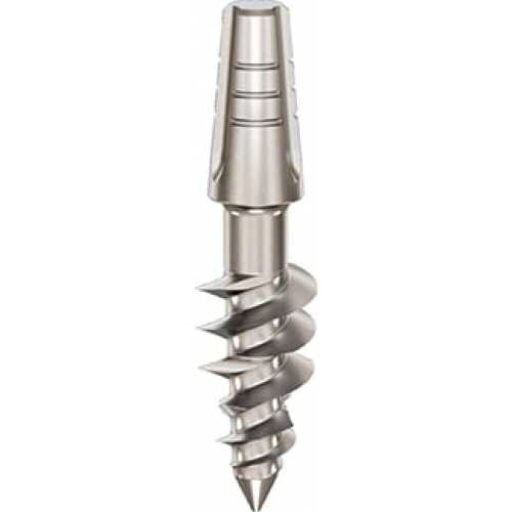
Compressive dental implants are one-piece titanium implants designed for patients with bone loss. Unlike conventional implants, short, three-piece screws that rely on soft cancellous bone, compressive implants are longer and compress the bone during insertion. This creates immediate stability.
Compressive implants are closely related to basal implants but have a less aggressive design. The tip of compressive implants is rounded compared to the tip of basal implants that is sharper. Basal implants are used to pierce deep into the hard cortical bone layer. Compressive implants compress the cancellous bone to provide stability. Compressive implants are like a middle ground between short, rounded conventional implants and sharper basal implants.
The design of compressive implants also reduces the risk of infection. Conventional implants have three separate components with microscopic gaps where bacteria accumulate, leading to peri-implantitis. Compressive implants have a smooth surface where they pass through soft tissue, dramatically reducing bacterial build-up and long-term complications.
Compressive Implants vs. Conventional Implants
Why should I choose compressive implants instead of traditional dental implants?
Conventional implants require 4–8 months of treatment across multiple visits to place the screw, abutment, and crown. If bone grafting or a sinus lift is needed, that adds another 4–6 months. With compressive implants, your fixed bridge is ready in 5 days after implantation.
The one-piece construction eliminates the gaps between components where bacteria accumulate. This makes compressive implants significantly safer over the long term compared to conventional three-piece systems. For patients with bone loss, this is particularly important, conventional implants often fail precisely because the cancellous bone they depend on has resorbed.
No bone grafting is required. No sinus lift. No extended recovery. Compressive implants work with the bone you have.
Compressive Implants vs. Basal Implants
Are compressive implants safer than basal implants?
Both compressive and basal implants are one-piece titanium implants capable of immediate loading. The key difference is placement depth and surgical intensity. Basal implants are longer and designed to anchor deep into the hard cortical bone, which requires a more aggressive surgical approach.
Compressive implants use a rounded base that gently compresses bone tissue on insertion, making them less invasive and suitable for patients where a lighter touch is appropriate. Most experienced basal implantologists use both types together, placing compressive implants in areas with moderate cancellous bone and basal implants where cortical anchorage is needed. This combination allows for complete, full dental restoration even in patients with uneven bone structures.
Compressive Dental Implant Brands
What brands produce compressive implants and where are they made?
All high-quality European basal implant manufacturers also produce compressive implants. Two of the trusted brands are used by leading dentists:
- 🇮🇹 BasalFix
- 🇨🇭 ROOTT by Trate
- 🇨🇭 Monoimplants
- 🇨🇭 Ihde Dental, Biomed, Simpladent
- 🇮🇹 Tramonte
These brands engineer implants for precision, excellent biocompatibility, and immediate-loading performance. All implants are made from high-grade titanium alloy, the same material used in medical implants worldwide, that the body accepts without rejection.
Warranty
What guarantee comes with compressive implants?
Compressive implants come with a 10-year warranty covering manufacturing defects and workmanship issues. This reflects the confidence both BasalFix and Monoimplants have in their clinical outcomes, backed by decades of proven results.
Who Is a Candidate for Compressive Implants?
Can I get compressive implants even if I've been told I need a bone graft?
Compressive implants were specifically developed for patients who conventional dentists say cannot receive standard implants without expensive preparatory procedures. Good candidates include:
- Patients with significant bone loss or bone atrophy
- Anyone wanting to avoid bone grafting or sinus lift
- Patients with gum disease or periodontitis
- Smokers
- Patients with diabetes
- Anyone seeking immediate loading (teeth fixed within days)
Even if you have active gum disease, compressive implants can still work for you. The full extraction of diseased teeth halts disease progression, while the compressive implants anchor in bone that is less affected by the inflammatory process. Your gums heal around a stable, already-loaded bridge.
Compressive Implants for Smokers and Diabetics
Can I get compressive implants if I smoke or have diabetes?
Yes, compressive implants are a reliable solution for both smokers and diabetic patients.
For smokers, conventional implants often fail because heat from cigarette smoke damages soft tissue around short implants. Compressive implants anchor deeper into bone tissue that is not directly affected by smoke. The result is a stable, functional restoration. Stopping smoking after treatment is recommended for optimal healing, but it is not a requirement for candidacy.
For patients with diabetes, conventional implants have high failure rates due to impaired healing in soft cancellous bone. Compressive implants offer immediate stability through bone compression. Combined with basal implants they do not depend on soft tissue healing, making them effective.
If you have high blood pressure, compressive implants are also suitable with approval from your doctor or cardiologist.
And for patients who practise contact sports such as karate, boxing, or rugby, compressive implants are an excellent choice, they are well-anchored and stable, though wearing a mouthguard during sport is always recommended.
The Compressive Implant Procedure
What happens during the compressive implant treatment, and how long does it take?
The treatment process is straightforward and fast. After a full assessment, your dentist extracts any failing teeth, prepares the implant sites, and places the compressive implants in a single surgical session. Because of the immediate stability achieved through bone compression, a fixed temporary bridge is attached within 5 days.
There is no waiting period for bone healing. There are no separate consultations for abutments and crowns months later. From first consultation to fixed teeth, the entire process takes less than a week for most patients.
Clinical Case Studies with Compressive Dental Implants
-
Basal Implants for Edentulism and Bone Atrophy
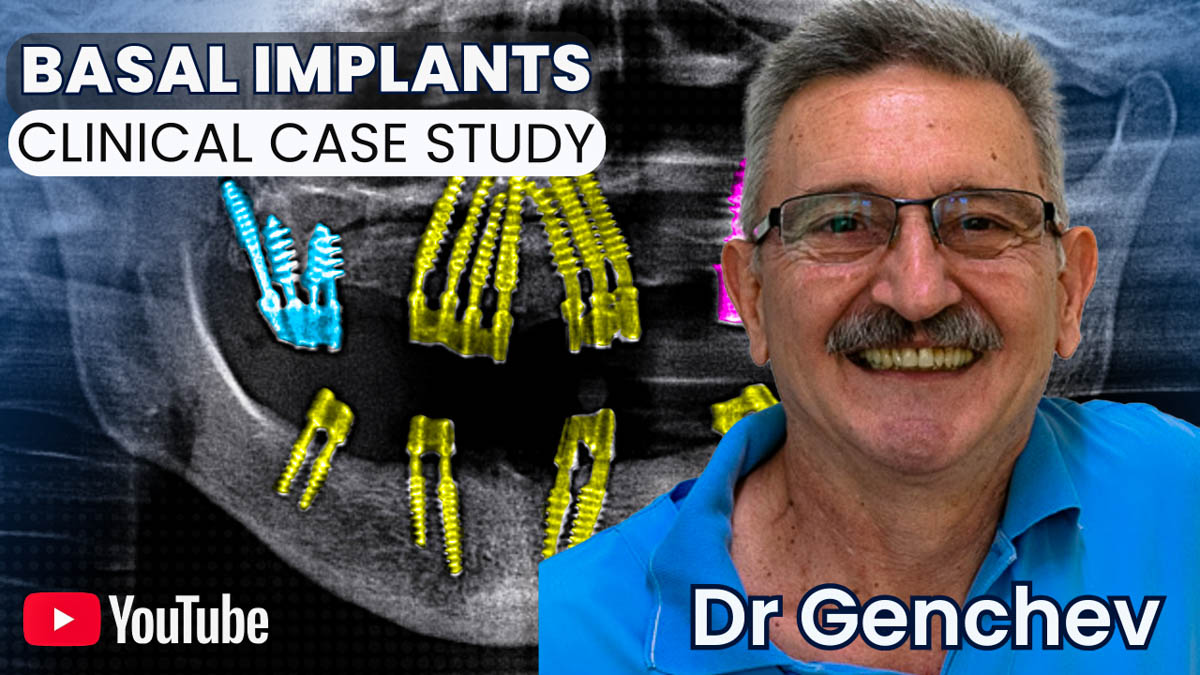
Clinical case study of Dr Genchev’s basal implant protocol for total edentulism and severe bone atrophy