What are my options for dental crowns with basal dental implants?
When you receive basal dental implants, choosing the right dental crown material is essential for both function and aesthetics. Your new teeth consist of a full dental bridge with 12-14 crowns custom-made to fit the shape of your jaw. You can select from three main crown materials: PFM metal-ceramic, zirconia, or composite. Each option offers different advantages depending on your budget, dental condition, and personal preferences. The best material for you depends on factors like whether you grind your teeth, the quality of your bone, and your aesthetic goals.
Dental Bridge
What kind of dental bridge is fitted on top of the basal dental implants?
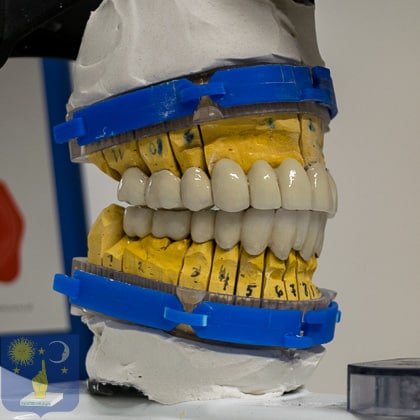
The dental bridge for basal implants is a full-arch restoration that connects all your crowns into a single unit that resists the pressure of mastication. This bridge fits over all the basal implants and any preserved natural teeth, creating a complete set of 12-14 teeth on each jaw. The bridge is permanently fixed to your implants using dental cement, providing exceptional stability for normal chewing function. Unlike removable dentures, this fixed bridge stays in place permanently and gives the same functionality as natural teeth.
The full bridge design offers significant advantages over individual crowns. Because all the teeth are connected, the bridge distributes chewing forces evenly across all the implants, preventing stress on any single implant. This unified structure also prevents movement of individual teeth or implants, promoting faster healing and long-term stability. Most patients find the full bridge more comfortable and natural-feeling than alternative options.
Full Arcade
Will I have a complete set of teeth?
Yes, you will have a complete dental arcade with a full set of teeth from front incisors to back molars. The basal implant bridge recreates all your natural teeth, including the molar teeth at the back of your jaw that are essential for chewing. This differs from the All-on-4 system that often provides only 8 to 10 crowns with limited back tooth support. And you cannot chew naturally with the back teeth. With basal implants, you get 12-14 crowns per jaw, restoring full chewing functionality so you can eat normally with your back teeth.
Made-to-Measure Bridge vs. Prefabricated
Is my dental bridge custom-made?
Your dental bridge is always made-to-measure, custom-designed specifically for your mouth. The implant dentist takes precise impressions after placing your basal implants, and the dental laboratory fabricates a bridge that perfectly fits your unique jaw structure and facial features.
Prefabricated bridges are never used with basal implants because every patient’s jaw anatomy, implant positions, and bite alignment are different. The made-to-measure approach ensures proper fit, optimal aesthetics, and even distribution of chewing forces across all your implants. Your dentist also customizes the tooth color, shape, and size to match your facial proportions and personal preferences.
Dental Crowns
What types of crown materials are available?
You can choose from three main types of crown materials for your basal implant bridge: PFM metal-ceramic, zirconia, and composite. Each material has specific characteristics that make it more suitable for certain patients. The implant dentist will recommend the best option based on your dental condition, budget, and whether you grind your teeth. Understanding the differences helps you make an informed decision about which material will serve you best long-term.
PFM Metal-Ceramic
What are the advantages of PFM metal-ceramic crowns?
PFM (Porcelain Fused to Metal) metal-ceramic crowns feature a strong metal base covered with a ceramic overlay that looks like natural tooth enamel. This combination provides excellent strength from the metal core while maintaining good aesthetics from the ceramic surface. The metal base, typically made from chrome-cobalt alloy, gives the crown exceptional durability to withstand strong chewing forces and teeth grinding.
Modern PFM crowns have improved significantly from older designs. The ceramic now covers the entire crown including the edge that contacts your gums, eliminating the dark line that was common with old-style PFM crowns. The chrome-cobalt base does not give a dark tint to your gums like older metal alloys did. PFM crowns offer the best balance of strength, durability, and cost-effectiveness, making them the most popular choice for basal implant bridges. In most cases, the bridges can be repaired in the mouth without needing to be removed.
Zirconia
What are the advantages of zirconia crowns?
Zirconia crowns are made from a white ceramic material that allows light to pass through naturally, similar to real tooth enamel. These metal-free crowns provide superior aesthetics because they look completely natural and never show any dark lines around the gum. Zirconia is exceptionally strong and biocompatible, making it an excellent choice for patients who prioritize aesthetics and have sufficient bone quality to support the material.
However, zirconia crowns have limitations for certain patients. The material can chip or crack under the extreme pressure of teeth grinding (bruxism), making it less suitable if you grind your teeth at night. Zirconia is also more expensive than PFM crowns. While the aesthetics are outstanding, especially for front teeth, many dentists recommend PFM for patients who need maximum durability or have budget constraints.
Zirconia crowns can be made in different ways. Full-zirconia is made with no metal support. Ask if it is covered with an enamel varnish to protect it. Alternatively, zirconia can be made with a layer of zirconia on a metal base. But, zirconia on metal can chip easily.
Composite
What are the advantages of composite crowns?
Composite crowns are made from resin-based materials like PEEK that are significantly lighter than ceramic or zirconia. These crowns work well for patients with poor bone density who cannot support the weight of heavier ceramic or zirconia bridges. Composite materials are also easier to repair if they chip or crack, and repairs can often be done directly in the mouth without removing the entire bridge.
The main advantage of composite crowns is their light weight, which reduces stress on the implants and supporting bone. However, composite is softer than ceramic or zirconia, making it more prone to staining and wear over time. Sometimes the structure of the composite bridge is made-to-measure but the crowns are prefabricated. Check with the dentist. Not all basal implant dentists offer composite crowns because they require different laboratory equipment and expertise to fabricate properly. If you’re interested in composite crowns, ask your dentist during consultation if this option is available.
Comparison
How do the different crown materials compare?
Understanding how PFM, zirconia, and composite crowns compare helps you choose the best material for your specific situation. Each material excels in different areas, and the right choice depends on your priorities, dental condition, and budget. The following comparisons highlight the key differences in aesthetics, durability, and cost.
Aesthetics
Which material looks most natural?
Zirconia crowns provide the most natural appearance because they are completely white and allow light to pass through like natural tooth enamel. They look especially beautiful for front teeth where aesthetics are most important. Modern PFM metal-ceramic crowns also offer excellent aesthetics with the ceramic covering the entire crown, preventing any visible dark lines. The ceramic overlay on PFM crowns can be color-matched to look very natural.
Composite crowns can achieve good aesthetics initially but may stain or discolor over time more than ceramic materials. Depending on how they are made they tend to degrade after 2 years. For most patients, the difference in aesthetics between well-made PFM and zirconia crowns is minimal unless you look very closely. The skill of the dental laboratory and the quality of the ceramic overlay matter more than which material you choose.
Durability
Which crown material lasts longest?
PFM metal-ceramic crowns offer the best durability, especially for patients who grind their teeth. The metal base provides exceptional strength that can withstand years of heavy chewing forces without breaking. If the ceramic overlay chips, it can be repaired directly in your mouth without removing the bridge. PFM crowns are the most resistant to the wear and pressure caused by bruxism.
Zirconia is very strong but can crack or chip under extreme pressure from teeth grinding. Composite crowns are the softest material and wear down faster than ceramic options, though they are easier to repair. For long-term reliability and resistance to breakage, PFM crowns typically outlast the alternatives, which is why many experienced implant dentists recommend them for full-arch restorations.
Price
How do the costs compare?
PFM metal-ceramic crowns are the most cost-effective option, offering excellent durability and aesthetics at a moderate price point. This makes them accessible for most patients while still providing high-quality results. Zirconia crowns are more expensive due to the advanced material and fabrication techniques required, though many patients consider the superior aesthetics worth the additional investment.
Composite crowns are a similar price to PFM metal-ceramic, though availability varies by dentist. When comparing prices, consider the long-term value rather than just the initial cost. PFM crowns may save money upfront and last longer, especially if you grind your teeth. Discuss pricing options during your consultation to find the best solution for your budget.
Advice for Each Dental Condition
Which crown material is best for my specific situation?
Your dental condition significantly influences which crown material will work best. Patients with bruxism have different needs than those with severe bone loss. The implant dentist evaluates your individual situation and recommends the material most likely to provide successful long-term results. Understanding these recommendations helps you make the right choice for your circumstances.
Best Option for Bruxism
What crown material should I choose if I grind my teeth?
If you suffer from bruxism (teeth grinding), PFM metal-ceramic crowns are your best option. The metal base provides the strength necessary to withstand the extreme pressure of grinding without breaking or wearing down quickly. The ceramic overlay is hard enough to resist wear while still looking natural. If the ceramic chips from grinding, it can be repaired in the mouth without removing the entire bridge.
Most dentists also provide a mouthguard to wear while sleeping, which protects your crowns from grinding damage. This combination of durable PFM crowns plus a protective nightguard gives you the longest-lasting results. Zirconia is not recommended for severe bruxism because it can crack under pressure and is more difficult to repair. Composite wears down too quickly. PFM crowns give you peace of mind that your investment is protected against the forces of grinding.
Best Option for Severe Bone Loss
Which crown material works best with poor bone quality?
For patients with severe bone loss or poor bone density, composite crowns may be the best choice because they are significantly lighter than ceramic or zirconia. The lighter weight reduces stress on your implants and the supporting bone, giving them the best chance to stabilize and integrate successfully. This is especially important if your bone quality is compromised.
However, not all dentists offer composite crowns, and some prefer to use PFM even for bone loss cases because the metal base provides better load distribution. Discuss your bone condition with your implant dentist to determine whether composite crowns are available and recommended. In some cases, placing additional implants to distribute weight more evenly allows you to use PFM or zirconia crowns even with bone loss.
The Patient’s Choice
What choices do I have in how my new teeth look?
Beyond choosing the crown material, you also select the specific color and shape of your new teeth. The implant dentist works with you to create a smile that looks natural and matches your facial features. You can choose your preferred shade for the new teeth at the start of the treatment. These aesthetic choices allow you to customize your final result to suit your personal preferences and desired appearance.
Available Tints
What color options are available for my teeth?
You can choose from several standard tooth shades that range from bright white to more natural off-white tones. The dentist shows you samples and helps you select the color that looks most natural with your skin tone and age. Most patients choose A2 or A3 for a natural appearance, though you can go brighter or more subtle based on your preferences.
A1 Bright Off-White
A1 is a bright, luminous off-white that looks noticeably white without being artificial. This shade works well for patients who want whiter teeth that still look natural. It’s brighter than most natural teeth but not as stark as Hollywood-white veneers. A1 is popular with patients who want to improve their smile’s brightness while maintaining a natural appearance.
A2 Natural Off-White
A2 is the most popular shade because it matches the natural color of healthy adult teeth. This shade looks completely natural and age-appropriate while still being bright and clean. Most dentists recommend A2 for patients who want their teeth to look like beautiful natural teeth rather than obviously artificial ones. A2 blends well with your facial features and doesn’t draw attention to itself.
A3 Dull Off-White
A3 is a slightly warmer, more subdued off-white that looks very natural, especially for older patients. This shade has a touch more warmth and less brightness than A2, which can look more age-appropriate. A3 is ideal if you prefer subtle, understated aesthetics or if you want your teeth to match the natural color range of your age group.
B1 Bright White
B1 is the brightest white shade available, creating a very noticeable white smile similar to celebrity veneers. This shade is whiter than natural teeth and makes a bold aesthetic statement. If you want a dramatically white smile, B1 achieves that look. However, it may look less natural than the A-range shades, so consider carefully whether you prefer maximum brightness or natural appearance.
Additional Shades
There is a broad range of shades available for dental crowns split into 4 categories: A, B, C and D. Each category has up to 7 nuances, for example from A1 to A7.
Shape of Teeth
Can I choose the shape of my teeth?
Yes, you can customize the shape of your new teeth to suit your preferences and facial features. The dentist can create teeth with rounded edges for a softer appearance, or flat edges that look more straight. You can also choose whether you want your new teeth to copy the shape of your original natural teeth or create a completely new smile design.
Rounded or Flat
Tooth shape significantly impacts how your smile looks. Rounded tooth edges create a softer, more youthful appearance that many patients prefer for a gentle, approachable look. Flat or square edges give a stronger, more defined appearance that can look more masculine. The dentist can also create a custom shape that combines elements of both, tailored specifically to your facial proportions and desired aesthetic.
Copy Existing Shape of Teeth
If you have photographs of your original teeth before tooth loss, the dentist can replicate their natural shape in your new bridge. This creates familiarity and maintains your natural smile appearance. Many patients prefer this option because it feels most like “their” smile rather than someone else’s teeth. Copying your original tooth shape also ensures your new teeth match your facial features naturally since your original teeth developed in harmony with your bone structure and face.